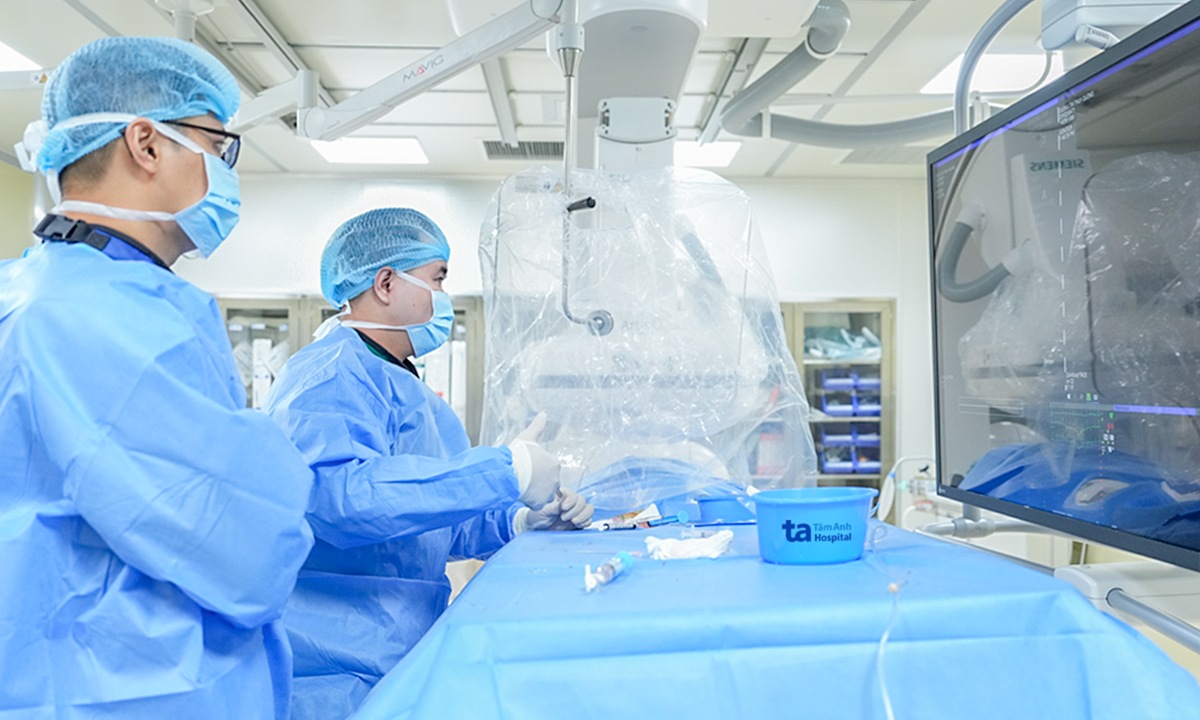
Doctor Nguyen Duc Nghia, a Master of Science and First-Degree Specialist in Chest and Vascular Surgery at Tam Anh General Hospital, Ho Chi Minh City, reported that the patient's left iliac artery was completely blocked by a large, firm blood clot adhering tightly to the vessel wall, obstructing blood flow to the limb. Ms. Huong had a history of atrial fibrillation but frequently forgot to take her medication and missed regular follow-up appointments. Doctors determined the initial cause stemmed from her underlying cardiovascular condition.
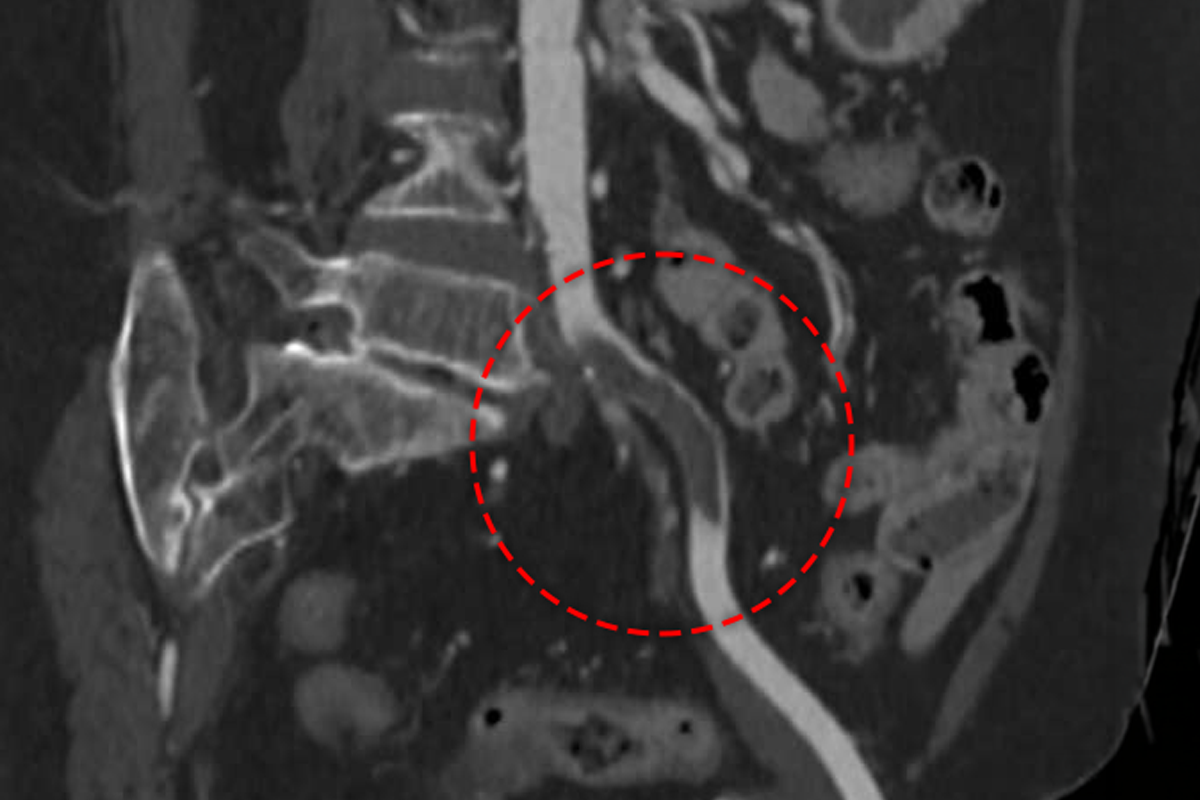 |
An MSCT scan shows the patient's left iliac artery blocked by a blood clot (red circle). *Tam Anh General Hospital* |
Doctor Nghia explained that in individuals with cardiovascular disease, irregular heart contractions can easily lead to the formation of blood clots. When patients arbitrarily stop taking anticoagulant medication, these clots grow larger and can travel throughout the body via the bloodstream, causing blockages in brain, limb, or organ arteries. If not promptly revascularized, this condition can result in necrosis, stroke, or be life-threatening.
In Ms. Huong's case, Doctor Nghia noted that the blood clot had completely obstructed blood flow to her limb. Due to its prolonged presence, the thrombus had become hardened and adhered tightly to the vessel wall, rendering conventional interventional methods ineffective. The surgical team performed an open surgery to thoroughly remove the blood clot.
During the intervention, the team observed that the left iliac artery had completely ceased pulsating, with no blood circulation, and surrounding tissues showed signs of edema due to localized ischemia. The blood clot had begun to fibrose and was tightly adhered to the vessel's intima due to its long duration. Doctors carefully dissected the thrombus from the vessel wall, extracting the entire clot from the lumen without causing damage to the blood vessel.
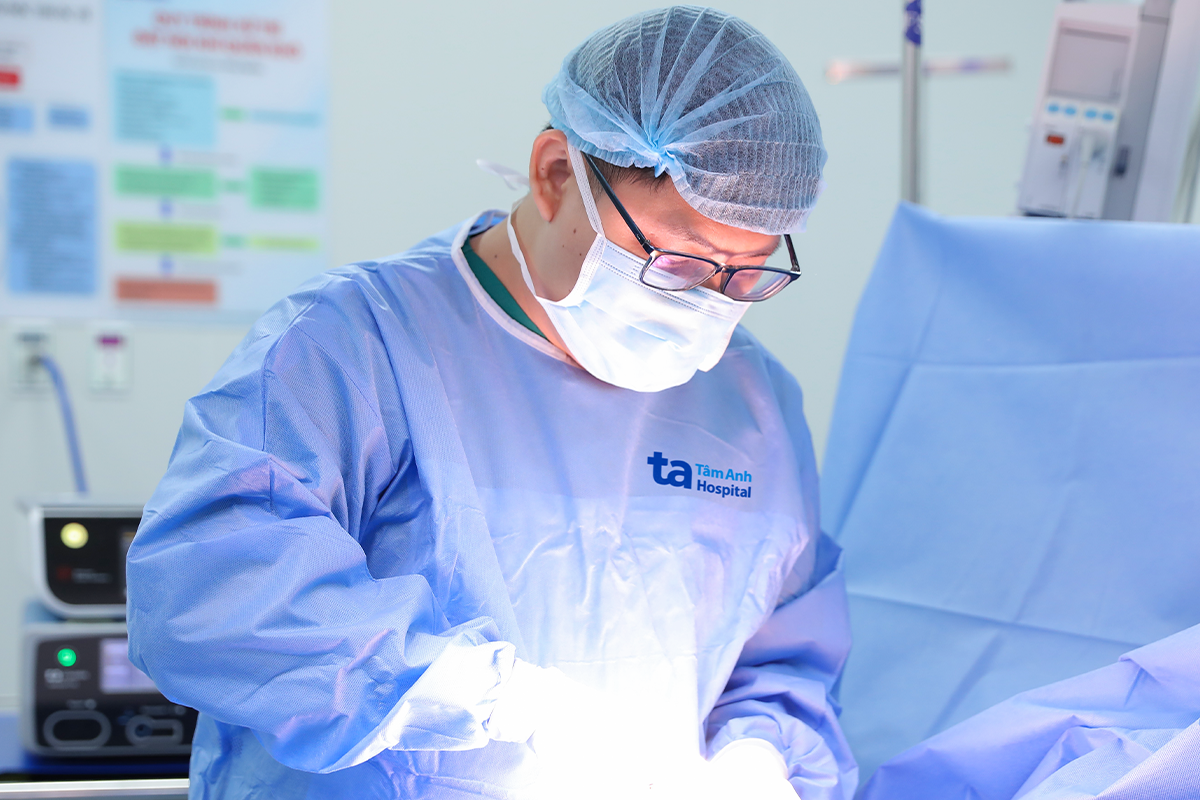 |
Doctor Nghia performs surgery to remove the hardened thrombus from the patient. *Tam Anh General Hospital* |
After about two hours of surgery, blood flow was restored, and the artery resumed pulsating rhythmically. One day later, the patient's leg was warm, pain-free, and had normal movement. She was discharged from the hospital.
Doctor Nghia emphasized that individuals with cardiovascular disease must strictly adhere to their treatment protocols, take medication regularly, and attend periodic follow-up appointments as prescribed. If symptoms such as pain, numbness, cold limbs, or discoloration appear, patients should seek immediate medical attention for timely diagnosis and management.
Bao Anh
*Patient's name has been changed*
| Readers can submit questions about cardiovascular disease here for doctor consultation. |