Many people believe excessive tearing is simply due to overactive tear glands. However, this phenomenon often occurs because the eyes are irritated or the tear drainage system is not functioning correctly. Identifying the exact cause is crucial for effective treatment and preserving vision.
**Dry Eyes**
Dry eyes is a common cause of continuous tearing. When the surface of the eyeball is not adequately lubricated, the eyes signal the tear glands to produce a large amount of reflex tears to compensate. These tears are watery but contain less mucus and oil, meaning they do not maintain moisture effectively. This leads to persistent dryness, causing the eyes to continue watering.
In addition to tearing, individuals with dry eyes may experience a gritty sensation, burning, redness, or temporary blurred vision. These symptoms are often more noticeable after prolonged use of computers or phones, or when in air-conditioned environments.
**Blocked Tear Duct**
Normally, tears drain into the nose through a system of tear ducts. If this pathway becomes narrowed or blocked, tears cannot drain and overflow from the eye.
A blocked tear duct typically causes excessive tearing in one eye. It may also be accompanied by recurrent eye discharge or inflammation of the tear sac (dacryocystitis). While common in newborns, this condition can also affect adults due to age, infections, or injuries.
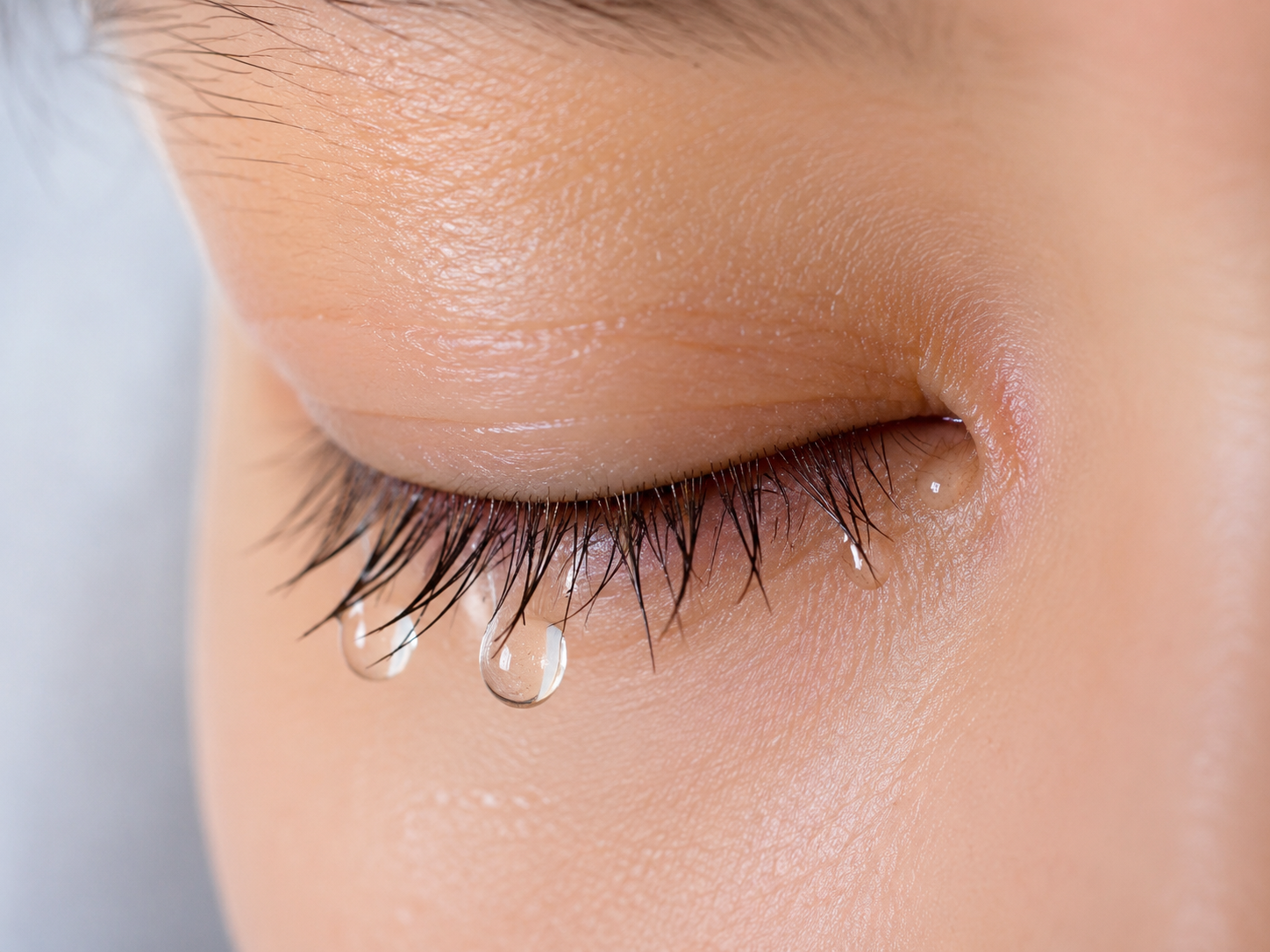 |
A blocked tear duct often causes excessive tearing in one eye. Photo created by AI |
**Allergies**
Allergens such as pollen, house dust, pet dander, mold, or cosmetics can trigger eye allergies. Upon contact with these irritants, the eyes react by producing more tears to wash away the substances causing the irritation.
Allergies are often accompanied by intense eye itching, redness, swollen eyelids, sneezing, or a runny nose. These symptoms tend to appear seasonally or after exposure to specific allergens.
**Blepharitis**
Blepharitis is an inflammation of the eyelid margins, often associated with poorly functioning oil glands around the eyelids or an overgrowth of bacteria.
When the oil layer of the tear film is disrupted, tears evaporate more quickly, leading to dry eyes and stimulating the production of reflex tears. Individuals with blepharitis commonly report itching, burning, a gritty sensation, or crusty or sticky eyelids upon waking.
**Foreign Body or Entropion**
A small dust particle, an eyelash, an insect, or an ingrown eyelash rubbing against the cornea can cause continuous tearing. This is a natural reflex to flush out the foreign body and protect the cornea from damage. However, if the foreign body is not removed or the ingrown eyelash continues to rub, the eye can become scratched, painful, red, and sensitive to light. In such cases, it is advisable not to rub the eye, as this can worsen corneal damage.
Eye watering is generally not serious if it occurs temporarily after exposure to smoke, wind, or onions. However, individuals should seek medical attention if the condition persists for many days or recurs frequently, if they experience eye pain and redness, blurred or decreased vision, discharge or excessive eye gunk, or swelling and pain around the inner corner of the eye.
Bao Bao (Compiled)
| Readers can submit questions about ophthalmological conditions here for a doctor's response |