Hair dyeing does not inherently cause hair loss. However, frequent dyeing or using harsh chemicals can damage hair and scalp, leading to weaker hair and increased shedding.
Hair dyeing works by opening the hair cuticle to allow color molecules to penetrate, often using alkaline substances like ammonia and oxidizing agents such as hydrogen peroxide. Repeated dyeing can prevent the cuticle from fully closing, resulting in moisture loss, diminished elasticity, and making hair dry, brittle, and prone to split ends and breakage.
Many confuse hair breakage with hair loss. Hair breakage refers to the hair shaft snapping due to damage, while hair loss occurs when a hair strand detaches from the follicle. However, direct contact of chemicals with the scalp, causing prolonged irritation or inflammation, can also impact the environment that nourishes hair follicles.
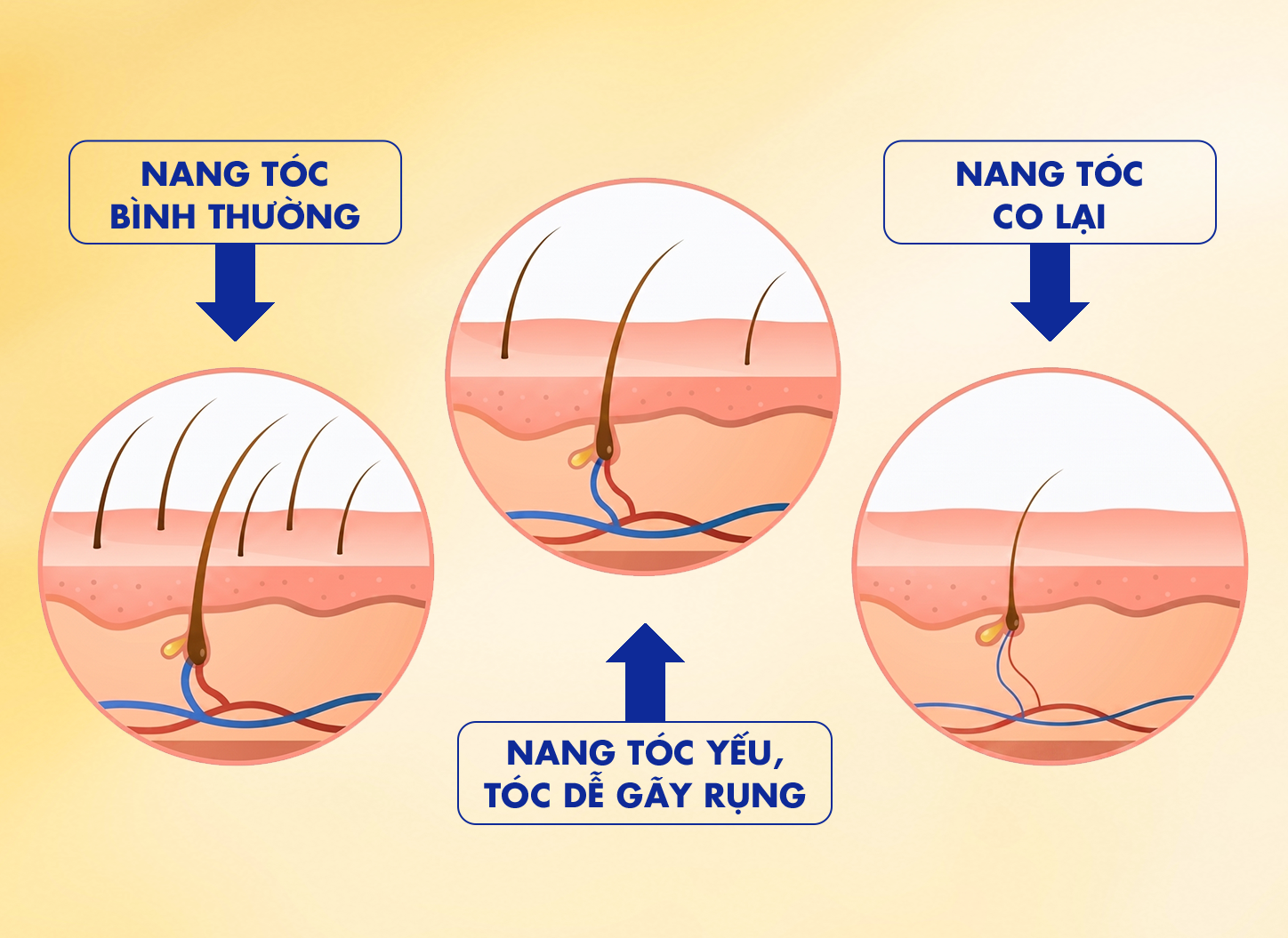 |
Normal hair follicles and hair follicles damaged by factors such as heat and chemicals, leading to easy breakage and shedding. Photo: Eco Pharmaceutical Joint Stock Company
Scalp inflammation weakens the natural protective barrier, reducing the efficiency of cells around hair follicles. Repeated inflammation can disrupt the hair growth cycle, causing hair to enter the shedding phase prematurely. Individuals with sensitive scalps, a history of scalp dermatitis, or existing hair loss due to hormonal imbalances, micronutrient deficiencies, or stress are more susceptible to these issues.
Beyond chemicals, many people who dye their hair also bleach, perm, straighten, or dry it at high temperatures. These combined actions accelerate hair weakening. Therefore, many cases of significant hair loss after dyeing are actually the result of multiple contributing factors, not solely the dye.
To minimize hair damage and loss, choose hair dyes from reputable sources, perform a patch test before use, avoid dyeing on scratched or inflamed scalps, and space out dyeing sessions by approximately 6 months. Additionally, ensure adequate intake of protein, iron, zinc, and essential vitamins to support hair follicles.
If hair loss persists for several weeks after dyeing, hair thins rapidly, bald patches appear, or if accompanied by itching, redness, or scalp flaking, consult a dermatologist to determine the underlying cause.
Depending on the case, a doctor may treat scalp inflammation or advise on appropriate nutritional supplements. For women, ingredients like: cynatine, horsetail extract, and pumpkin seed support nourishment and stimulate hair stem cell development. For men, cynatine, saw palmetto extract, aged black garlic, and american ginseng offer similar benefits. These substances also improve scalp moisture, helping reduce hair loss and promote healthier hair growth.
Doctor Hoang Quyet Tien
Medical Information Center,
Tam Anh General Hospital Ho Chi Minh City