For a 68-year-old father with grade 3 knee osteoarthritis and an anterior cruciate ligament tear, ligament reconstruction surgery is not indicated. The knee joint has advanced degeneration. At this stage, pain and restricted movement primarily stem from damage to the entire joint, including eroded articular cartilage, narrowed joint space, bone spur formation, subchondral bone sclerosis, and synovitis, not solely from the torn ligament.
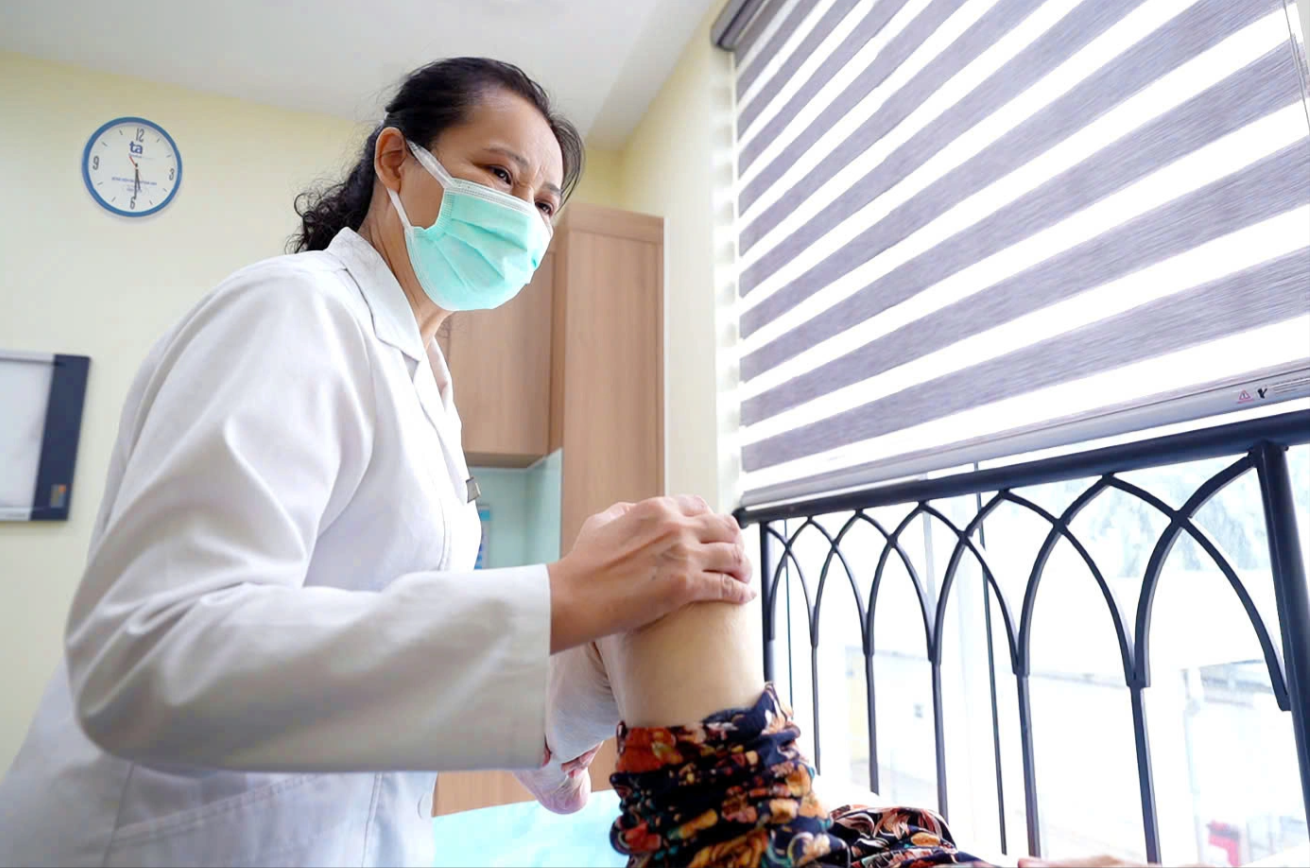 |
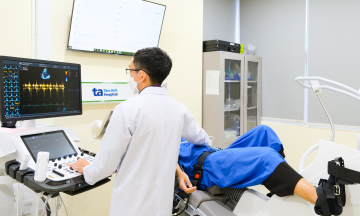
A doctor examines an elderly patient showing signs of a ligament tear. *Illustration: Tam Anh General Hospital* |
Anterior cruciate ligament reconstruction surgery only restores knee joint stability; it cannot regenerate lost cartilage, widen the joint space, or reverse the degenerative process. Therefore, even if the ligament graft heals well and the joint becomes more stable, the patient may still experience pain when walking, as the pain originates from degenerative damage to the joint.
In older adults with knee osteoarthritis, the intra-articular environment undergoes changes such as chronic inflammation and widespread cartilage damage. Consequently, functional recovery after ligament reconstruction is often lower than in younger individuals, while the risk of persistent pain, limited mobility, and post-operative complications is higher.
Typically, doctors initially prioritize conservative treatment for patients in this age group. This involves a combination of medication, physical therapy, weight loss (if overweight), strengthening exercises for muscles around the knee joint, and possibly intra-articular injections when indicated. The goal is to reduce pain, improve motor function, and maintain quality of life.
If the patient continues to experience severe pain, knee joint deformity, significant walking limitations, and conservative treatment is no longer effective, doctors will evaluate and consider total knee replacement surgery, rather than ligament reconstruction. The doctor selects a suitable artificial joint to compensate for the function of the damaged ligament, helping to stabilize the knee joint.
You should take your father to a hospital with an orthopedic and musculoskeletal specialty department for a direct examination by a doctor to receive appropriate treatment.
Dr. Nguyen Ngoc Tiep
Center for Orthopedic Trauma
Tam Anh General Hospital Hanoi
| Readers can submit questions about musculoskeletal diseases here for doctors to answer. |