Morphologically good embryos are those that develop correctly, exhibit a uniform cell structure, low fragmentation, and meet microscopic evaluation criteria in the in vitro fertilization (IVF) laboratory. However, preimplantation genetic testing (PGT) assesses an embryo's chromosome set and genetic abnormalities. Thus, a morphologically good embryo can still harbor chromosomal abnormalities, while one with suboptimal morphology might possess a normal chromosome set.
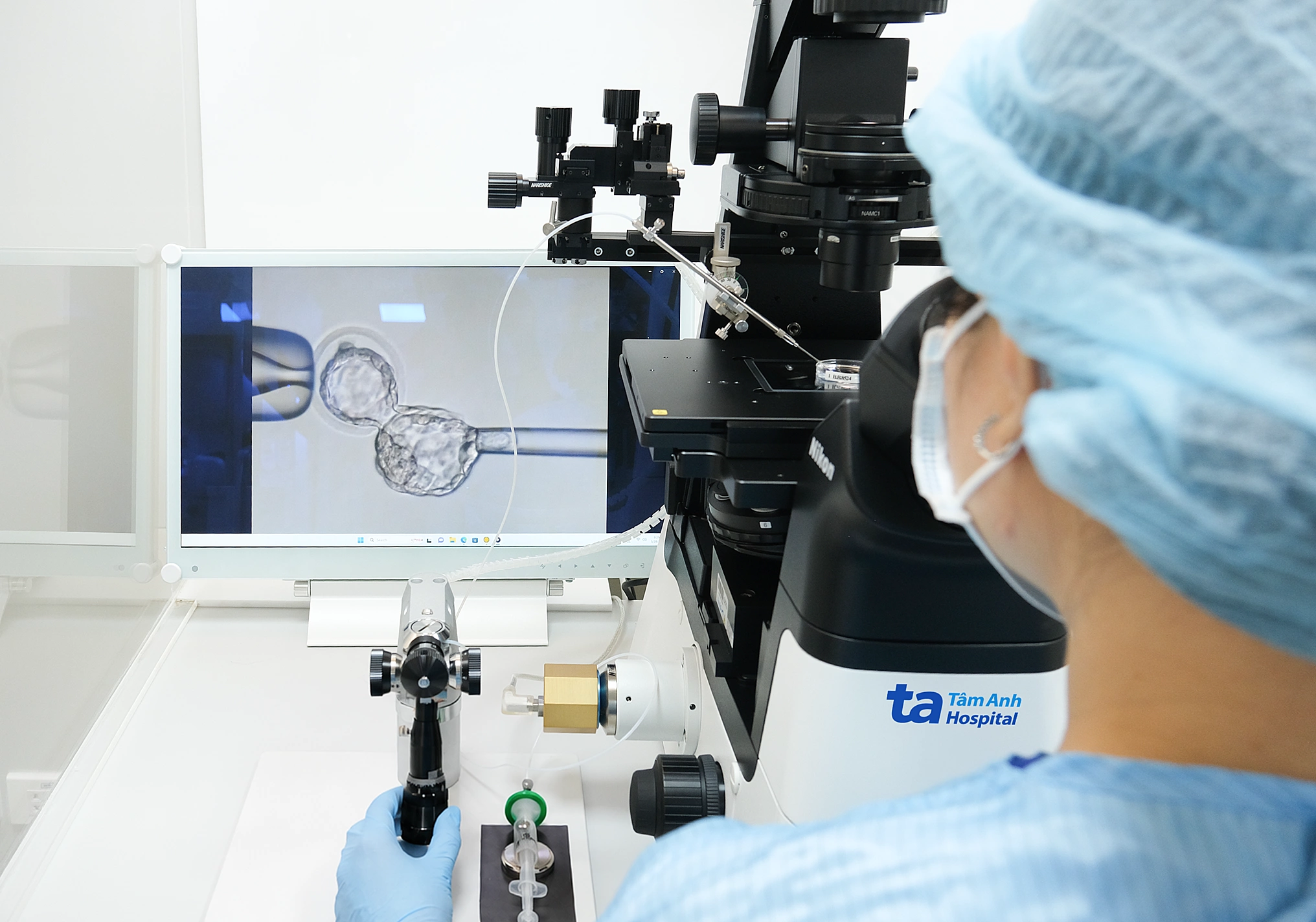 |
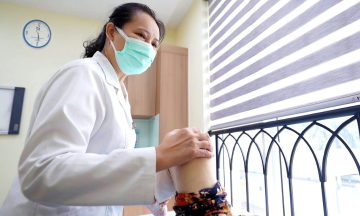
An embryologist performs preimplantation genetic testing (PGT-A) to assess chromosomal abnormalities. Illustration: IVF Tam Anh |
Maternal age significantly impacts embryo quality. Even with morphologically good embryos, women over 40 face a considerably higher rate of chromosomal abnormalities compared to younger women. Transferring aneuploid embryos (those with an abnormal number of chromosomes) can lead to implantation failure, increased risk of miscarriage, stillbirth, or the birth of children with syndromes caused by extra or missing chromosomes, such as Down, Edwards, or Patau. Furthermore, if either parent carries disease-causing genes or has structural chromosomal abnormalities, the pregnancy risks inherited diseases, affecting the child's development and health after birth.
To perform preimplantation genetic testing, embryologists biopsy a few cells from the outer trophectoderm layer of the blastocyst, which later forms the placenta, for chromosomal analysis. This analysis allows doctors to select embryos with higher implantation potential, thereby increasing pregnancy chances, reducing miscarriage risk, and limiting the risk of giving birth to a child with a genetic condition. At IVF Tam Anh, for example, many older women or those with a history of recurrent miscarriages undergo IVF combined with PGT-A (preimplantation genetic testing for aneuploidy) to detect chromosomal number abnormalities, enhancing the prospects of a healthy pregnancy and baby. Other PGT techniques include PGT-M (preimplantation genetic testing for monogenic disorders) for inherited single-gene diseases and PGT-SR (preimplantation genetic testing for structural rearrangements) for structural chromosomal abnormalities.
Having three morphologically excellent day 5 embryos is a positive indicator. However, at 40 years old, the risk of chromosomal abnormalities remains high, even with visually good embryos. If you have experienced multiple unsuccessful embryo transfers or have a history of miscarriage, preimplantation genetic testing is recommended.
Beyond embryo quality, pregnancy success also hinges on numerous other factors, including endometrial quality, uterine structure, hormonal balance, immune factors, maternal health, and contributions from both partners. A comprehensive examination by a doctor is essential to assess your overall situation and determine an appropriate treatment strategy.
Master Ma Pham Que Mai
Genetic Counselor
Center for Reproductive Assistance
Tam Anh General Hospital, TP HCM
| Readers can submit questions about infertility here for doctors to answer. |