Yes, in vitro fertilization (IVF) combined with preimplantation genetic testing for monogenic disorders (PGT-M) can significantly reduce the risk of having a child with hemophilia. Given your family history, genetic testing is the first step to determine if you are a carrier of the disease gene. This result is crucial for assessing risks for any future pregnancies or for planning an IVF cycle.
Hemophilia is an X-linked genetic disorder, causing individuals to experience prolonged bleeding or hemorrhage. Males, who have an XY chromosome set, will express the disease if they inherit an X chromosome carrying the disease gene. In contrast, women, with an XX chromosome set, often carry the gene without showing symptoms.
The inheritance pattern depends on both parents' carrier status. If the father has the disease but the mother is not a carrier, sons will typically not be affected. However, all daughters will inherit the X chromosome carrying the disease gene from their father and become carriers. If the mother is a carrier and the father is unaffected, for each pregnancy, sons have a 50% risk of developing the disease, while daughters have a 50% risk of being carriers. In cases where both the father has the disease and the mother is a carrier, the risk of inheritance for children is very high. Sons are at risk of developing the disease, and daughters may not only be carriers but can also express the disease if they inherit two abnormal X chromosomes from both parents.
If you are a carrier, during IVF, doctors can use PGT-M to select embryos free of the disease before transfer. This significantly reduces the risk of having a child with hemophilia. Embryo biopsy, a key part of PGT-M, is particularly useful for families with a history of genetic diseases, recurrent miscarriages, or multiple failed embryo transfers. It helps minimize the risk of genetic abnormalities and increases the chance of a successful pregnancy.
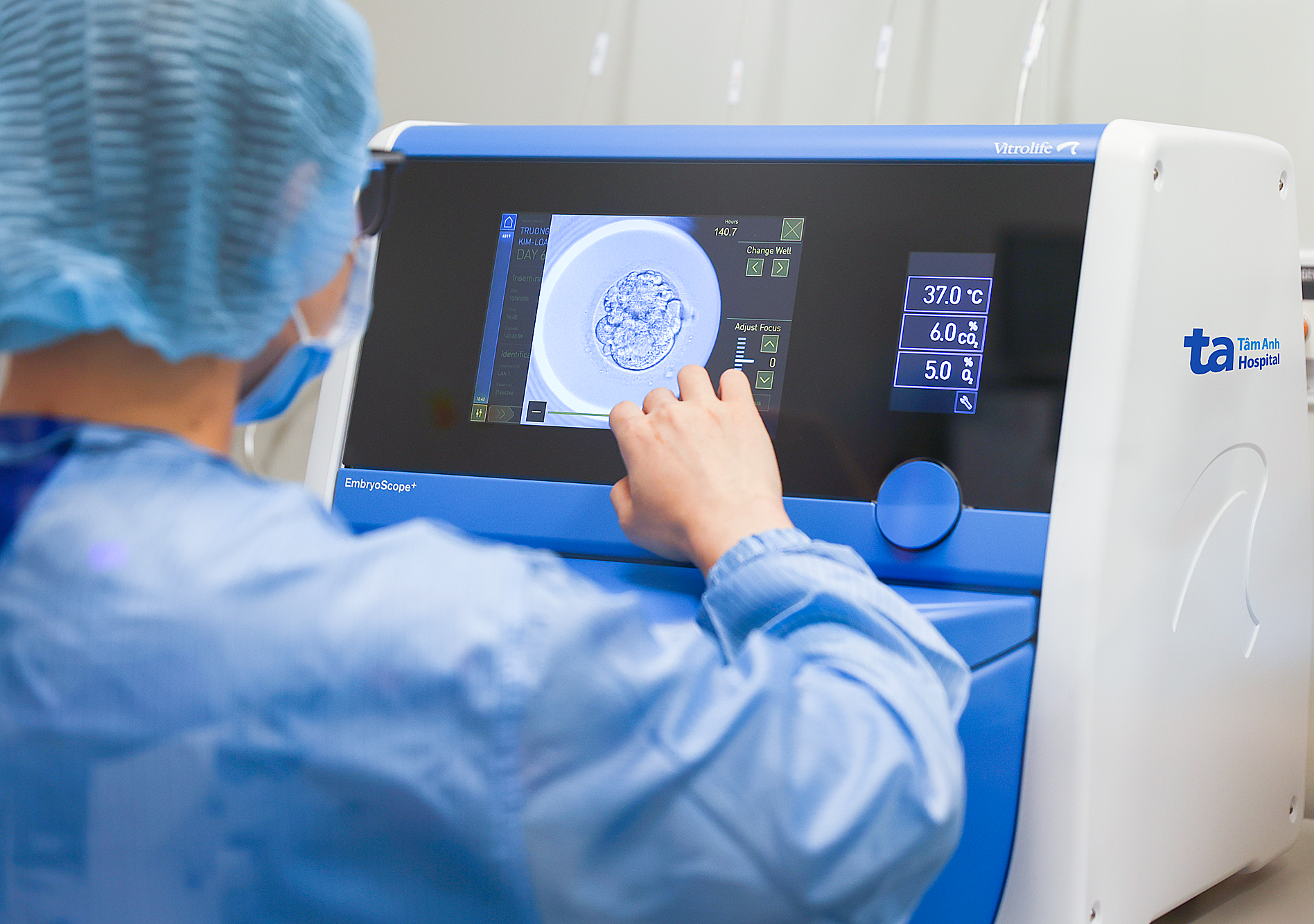 |
Time-lapse embryo culture system combined with artificial intelligence (AI). Photo: IVF Tam Anh |
At the Center for Reproductive Assistance, Tam Anh General Hospital, this process involves close coordination among clinical doctors, genetic specialists, and the embryology lab. This team accurately assesses whether a patient requires embryo biopsy, providing appropriate indications for each case.
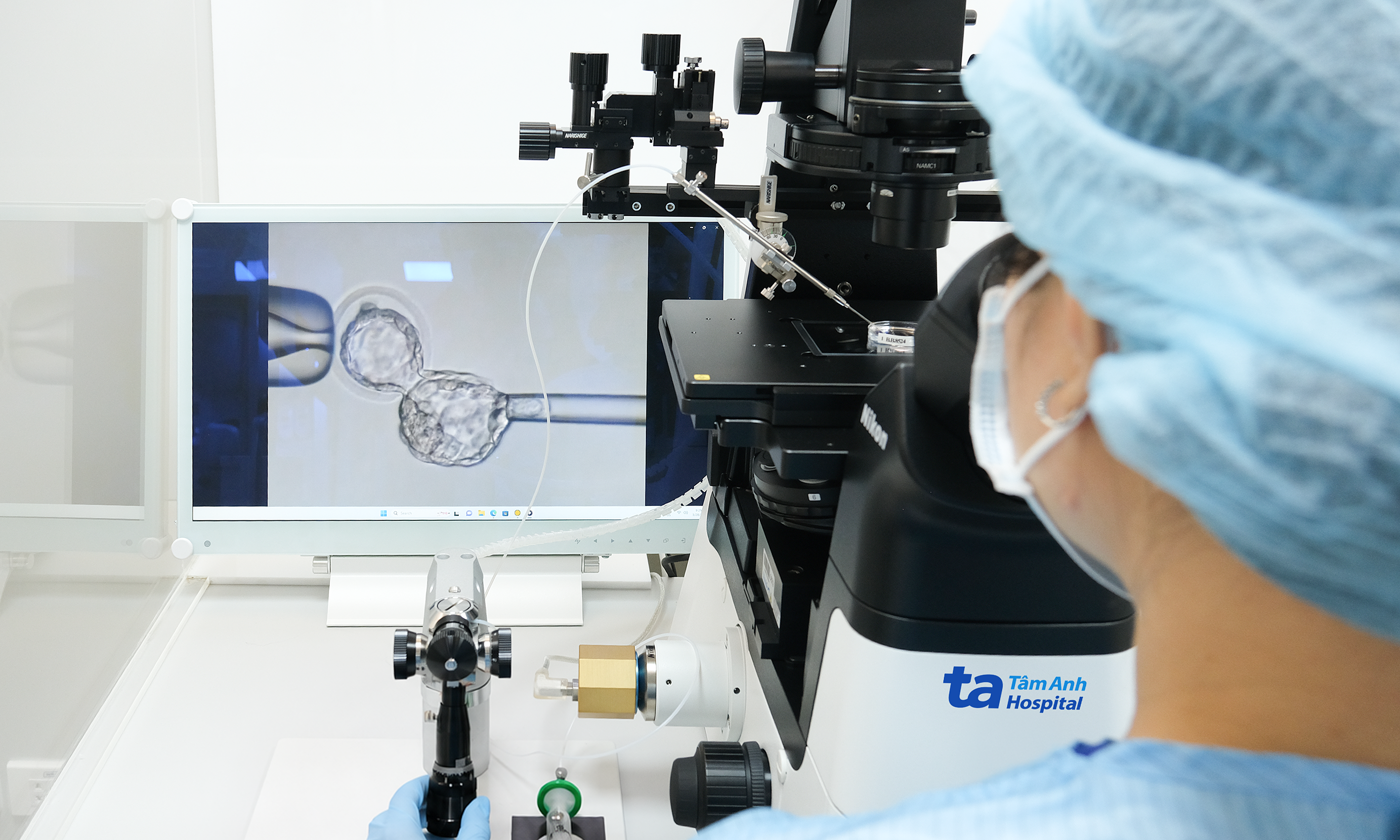
To perform this technique, embryos are cultured to day 5 or day 6, known as the blastocyst stage. An embryologist then biopsies 5-10 trophectoderm cells (which will develop into the placenta) for genetic analysis. After biopsy, embryos are cryopreserved while awaiting genetic analysis results. The survival rate of embryos after thawing at IVF Tam Anh currently reaches approximately 99.8%, helping to maintain embryo quality before transfer.
The time-lapse embryo culture system, integrated with artificial intelligence (AI), allows for continuous monitoring of embryo division in a stable environment. Data from AI assists embryologists in assessing the developmental potential of each embryo. However, to accurately determine if an embryo carries a genetic disease, embryo biopsy and gene analysis are still necessary.
Master Ma Pham Que Mai
Genetic Counselor
Center for Reproductive Assistance
Tam Anh General Hospital TP HCM