Associate professor, doctor Nguyen Trong Hung, director of the Center for Nutrition Counseling, Recovery, and Obesity Control at the National Institute of Nutrition, states that a suitable diet for improving blood fat levels should aim to reduce LDL-cholesterol, increase beneficial fats, and manage weight. Therefore, the following six foods should be prioritized:
- Green vegetables and fruits: These provide fiber, vitamins, minerals, and antioxidants. Soluble fiber found in oats, legumes, and various vegetables and fruits helps reduce cholesterol absorption.
- Whole grains: Brown rice, oats, and whole-wheat bread offer stable energy and more fiber than refined starches.
- Fish, especially fatty fish: Salmon, mackerel, and herring provide omega-3, which benefits cardiovascular health.
- Lean protein sources: Lean meat, skinless poultry, fish, tofu, and legumes.
- Healthy fats: Olive oil, soybean oil, canola oil, and nuts like almonds and walnuts (consumed in appropriate amounts).
- Low-fat milk: This supplements protein and calcium without significantly increasing saturated fat intake.
Additionally, individuals with high blood fat or those aiming to improve their blood fat levels should limit the following five foods:
- Animal fat and organ meats (liver, intestines, heart, kidneys, etc.): These contain high levels of cholesterol and saturated fat.
- Fatty red meat, poultry skin, and processed meats like sausages, bacon, and ham.
- Deep-fried foods, especially those cooked in oil used multiple times.
- Sweets, sugary drinks, and foods high in refined sugar, as these can increase triglycerides and promote weight gain.
- Alcohol, particularly for individuals with high triglycerides or fatty liver disease.
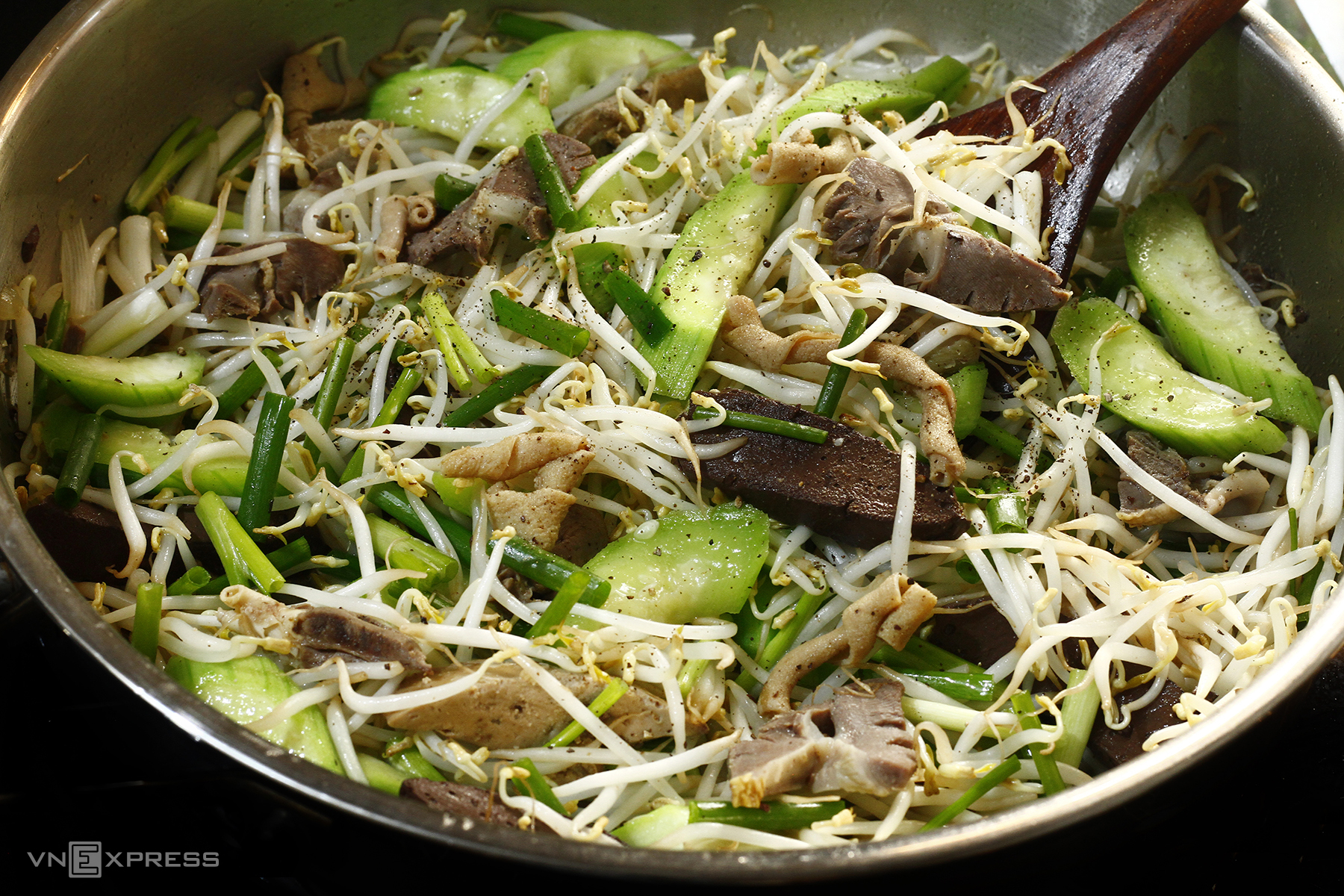 |
Animal organs are a popular dish, but their consumption should be limited for effective blood fat reduction. Photo: Bui Thuy |
Doctor Phan Thai Tan, a graduate of the University of Medicine and Pharmacy, TP HCM, and the Institute for Integrative Nutrition (IIN) in the US, states that an effective diet for lowering blood fat should limit foods high in refined carbohydrates and sugar, such as white rice, sweets, vermicelli, pho, hu tieu, and white bread. Additionally, incorporating fiber-rich foods is a way to improve health. Fiber, especially soluble fiber, binds to and removes dietary cholesterol from the body before the intestines can absorb it. Fiber also helps the intestines slowly absorb sugar and carbohydrates, thereby stabilizing blood sugar levels after meals and helping to improve blood triglyceride levels in individuals with fatty liver disease.
For breakfast, one can prepare simple, healthy, and effective dishes such as omelets, tuna salad, organic spinach protein, or bun rieu (with less vermicelli and more crab paste), or brown rice. If time is limited and a meticulously planned meal isn't feasible, flexibility is key, but one should balance the three essential nutrient groups: carbohydrates, protein, and fiber. Importantly, practicing "eating slowly and chewing thoroughly" is crucial.
If craving carbohydrates, bamboo shoot vermicelli can be a substitute. Prioritize unrefined, whole carbohydrates such as legumes, quinoa, potatoes, brown rice, and whole-grain oats. For protein, favor plant-based sources and limit animal sources, especially red meat (no more than two times per week or on weekends, with a maximum intake of 100g per day).
For individuals looking to prevent high blood fat, lose weight, and reduce fat effectively, practicing 16:8 intermittent fasting or adopting a low-carbohydrate diet focusing on protein and vegetables is beneficial. Intermittent fasting is a term describing cyclical eating and fasting patterns. This method allows the body sufficient time to fully digest food while strictly limiting calorie intake. The 16:8 method is popular, involving an eating window of six to eight hours and fasting for the remaining 16 to 18 hours. This practice stimulates energy metabolism, helping to reduce stress and obesity.
Experts advise that in addition to diet, individuals with high blood fat need to incorporate regular exercise, maintain a healthy weight, get enough sleep, and undergo regular blood fat checks. Treatment should not rely on a single food item but rather consider the entire lifestyle.
Thuy Quynh