Many parents worry that congenital heart disease will reduce their child's lifespan or prevent them from living a normal life. However, thanks to advancements in diagnosis, interventional cardiology, and surgery, most children with congenital heart disease can now live into adulthood.
Congenital heart disease refers to structural or functional abnormalities of the heart that develop while a baby is in the womb. These conditions can involve the septa between the heart's chambers, heart valves, or the major blood vessels connected to the heart.
The specific prognosis depends on the type and severity of the defect, the timing of treatment, and any co-existing conditions. Children with mild defects, such as a ventricular septal defect, a small atrial septal defect, or patent ductus arteriosus, can live almost normal lives if they receive appropriate treatment. For complex defects like tetralogy of fallot or a single ventricle heart, children often require multiple surgeries and long-term monitoring.
Many congenital heart defects can be completely or nearly completely repaired through various methods. These include replacing diseased heart valves with artificial ones, or repairing structural abnormalities within the heart such as closing atrial septal defects, ventricular septal defects, or patent ductus arteriosus via cardiac catheterization. These repairs aim to prevent long-term complications like arrhythmias, endocarditis, or heart failure. In more complex cases, children may require multiple interventions or surgeries and long-term specialist follow-up.
In your son's case, if the ventricular septal defect is completely closed, and his pulmonary artery pressure and heart function are normal with no significant valve damage or arrhythmias, the prognosis is very positive. He can develop physically and intellectually, study, play, and live like other children his age. However, he will still need scheduled cardiovascular follow-up appointments so doctors can monitor his heart's recovery and detect any residual shunts or rare post-surgical abnormalities.
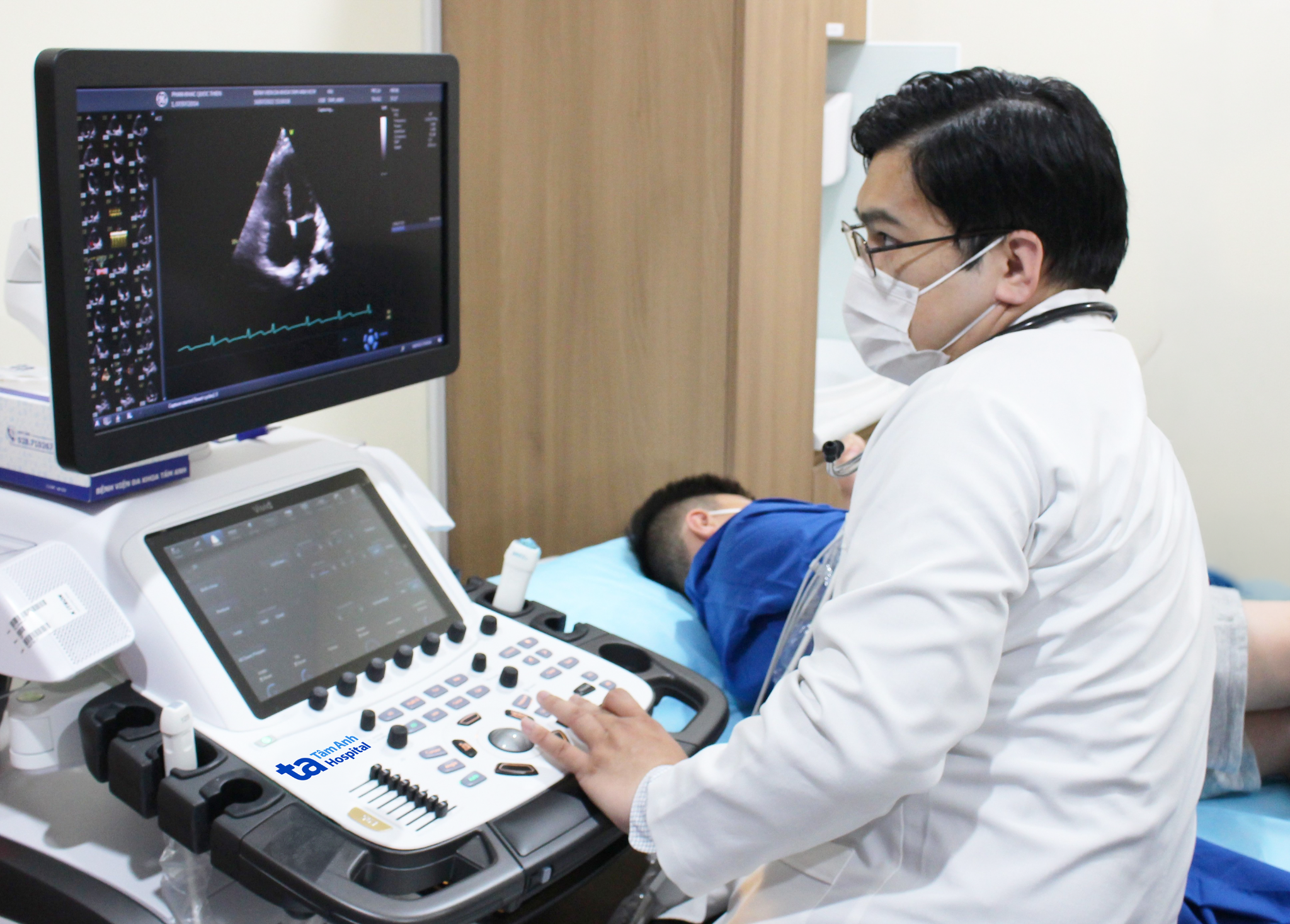 |
Dr. Vu Nang Phuc performs an echocardiogram to monitor the health of a child with congenital heart disease. Illustration: Tam Anh General Hospital. |
Once the surgical wound stabilizes, you can consult with a cardiologist about suitable physical activities for your child. Most children who have successfully undergone ventricular septal defect closure do not require long-term activity restrictions. Parents only need to avoid activities with a high risk of strong impact to the chest area while the sternum and surgical wound are not yet fully healed.
Regarding nutrition, children should eat a varied diet, including adequate amounts of carbohydrates, protein, and fats appropriate for their age. High-energy milk or special diets are not necessary if the child is growing normally. If your child is underweight, experiencing slow growth, or has poor appetite, you should discuss with a doctor to create a personalized meal plan.
Some children require medication during the post-surgical phase, but in many cases, medication can be reduced or discontinued once the heart stabilizes. Parents should not independently stop medication, change dosages, or reuse old prescriptions without a doctor's advice.
If your child exhibits symptoms such as rapid breathing, shortness of breath, cyanosis, unusual fatigue, decreased physical activity, prolonged poor eating, frequent vomiting, no weight gain, or reduced urination, you should take your child for an immediate examination.
Dr. Vu Nang Phuc
Head of Congenital Heart Department, Cardiovascular Center
Tam Anh General Hospital, TP HCM
| Readers can submit questions about cardiovascular diseases here for a doctor's response. |