Hung was involved in a highway accident during a trip after his high school graduation exam. He received emergency care at a local hospital where his left leg was amputated. Following the surgery, Hung's health deteriorated, leading to his transfer to Tam Anh General Hospital Hanoi.
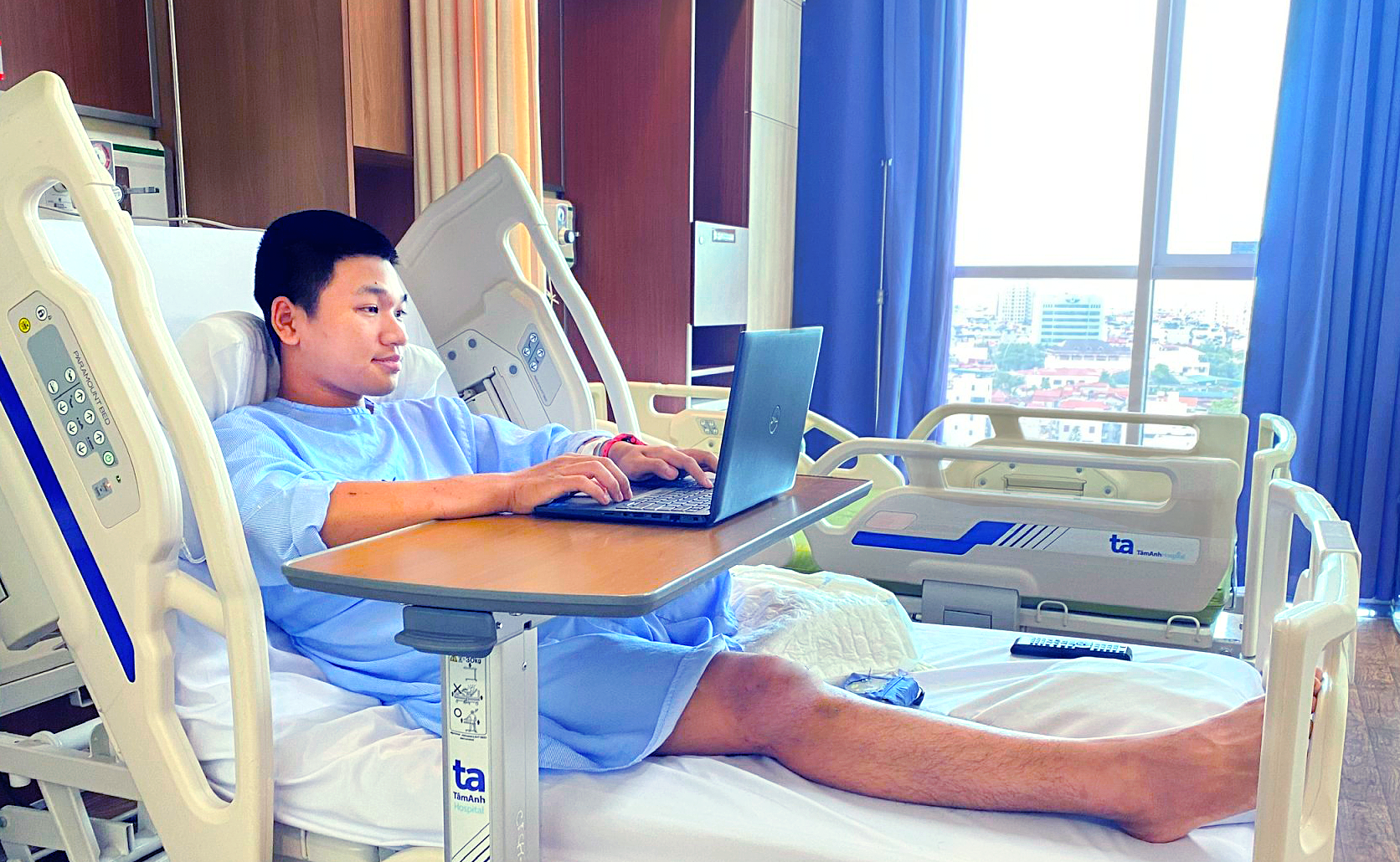 |
Hung applies for university admission in 2026. Photo: Tam Anh General Hospital |
Dr. Nguyen Quang Huy from the Orthopedic Trauma department reported that Hung was admitted with a high fever, lethargy, and a severely swollen stump. Blood tests revealed his creatine kinase (CK) enzyme level was 16 times higher than the normal limit, along with very low creatinine and glomerular filtration rate, and significantly elevated inflammatory markers.
Dr. Huy diagnosed Hung with acute rhabdomyolysis syndrome complicated by acute kidney failure and sepsis following the trauma. He was admitted to the intensive care unit (ICU) for specialized treatment. Doctors provided stump care, administered multimodal pain relief, broad-spectrum antibiotics, and medications to support liver and kidney function, while closely monitoring his blood parameters daily.
After five days, Hung's CK levels gradually returned to normal, inflammatory markers decreased, and his glomerular filtration rate improved. He continued treatment in the Orthopedic Trauma department. He received wound care, completed his antibiotic regimen, and began physical therapy with a specialist to learn to walk with crutches.
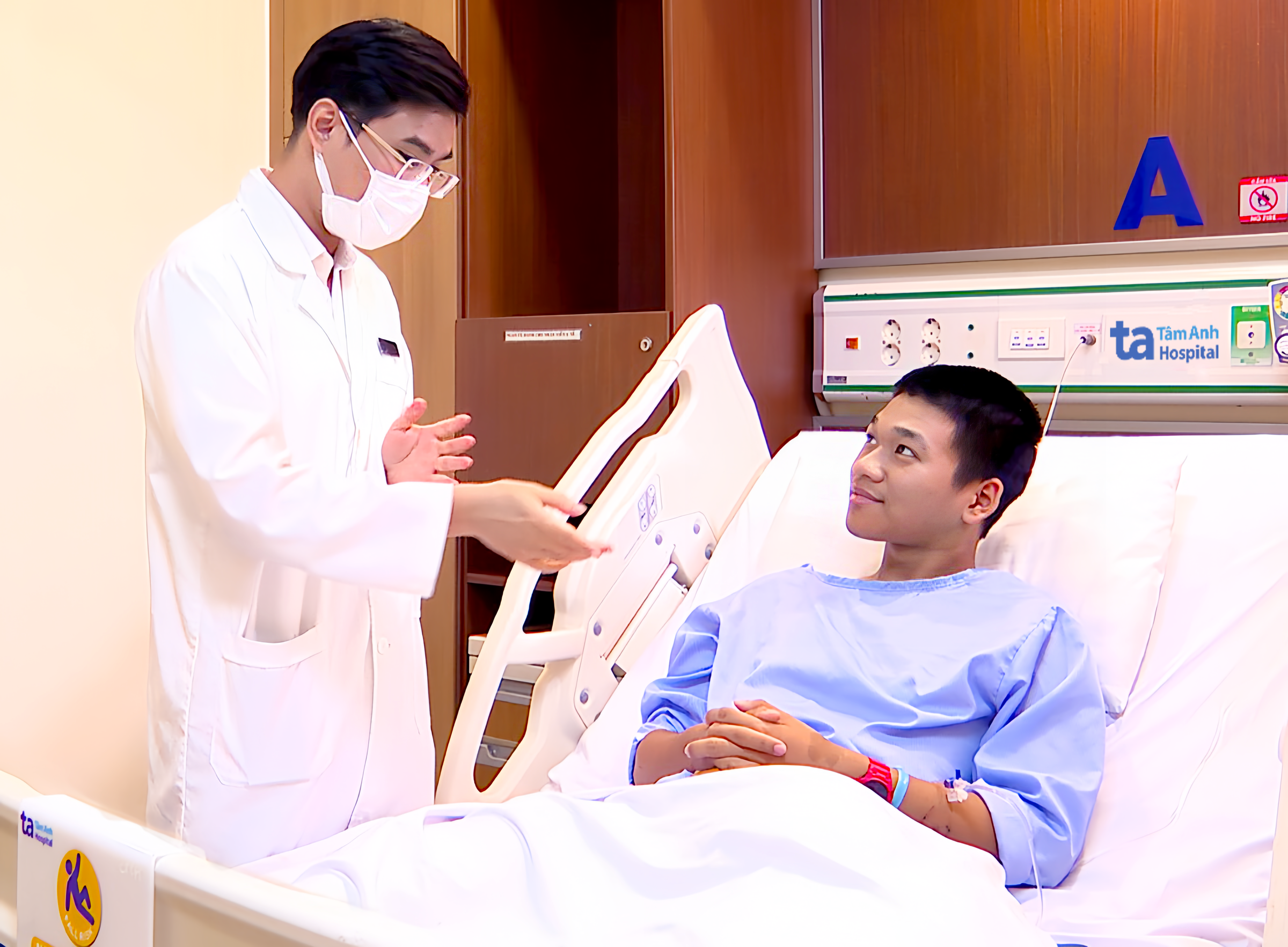 |
Dr. Huy discusses the possibility of walking with a prosthetic limb for Hung. Photo: Tam Anh General Hospital |
Dr. Huy explained that severely crushed limbs are critical injuries from accidents, requiring emergency care to manage traumatic shock and address associated damage to save the patient's life. Amputation becomes a necessary option when a limb is completely crushed, beyond repair, or poses a life-threatening risk.
However, surgery is only the initial step, as post-operatively, muscle cells continue to release toxins into the bloodstream. This can lead to rhabdomyolysis syndrome, complicated by acute kidney failure, electrolyte imbalance, and a high risk of severe infection, all of which continue to threaten the patient's life.
Given his youth, good health, resilience, and optimistic spirit, Hung recovered quickly and was discharged after two weeks. Doctors advised Hung to move carefully and be aware of the "phantom limb" effect – where the brain still senses the amputated left leg, potentially causing him to stumble, especially upon waking early in the morning.
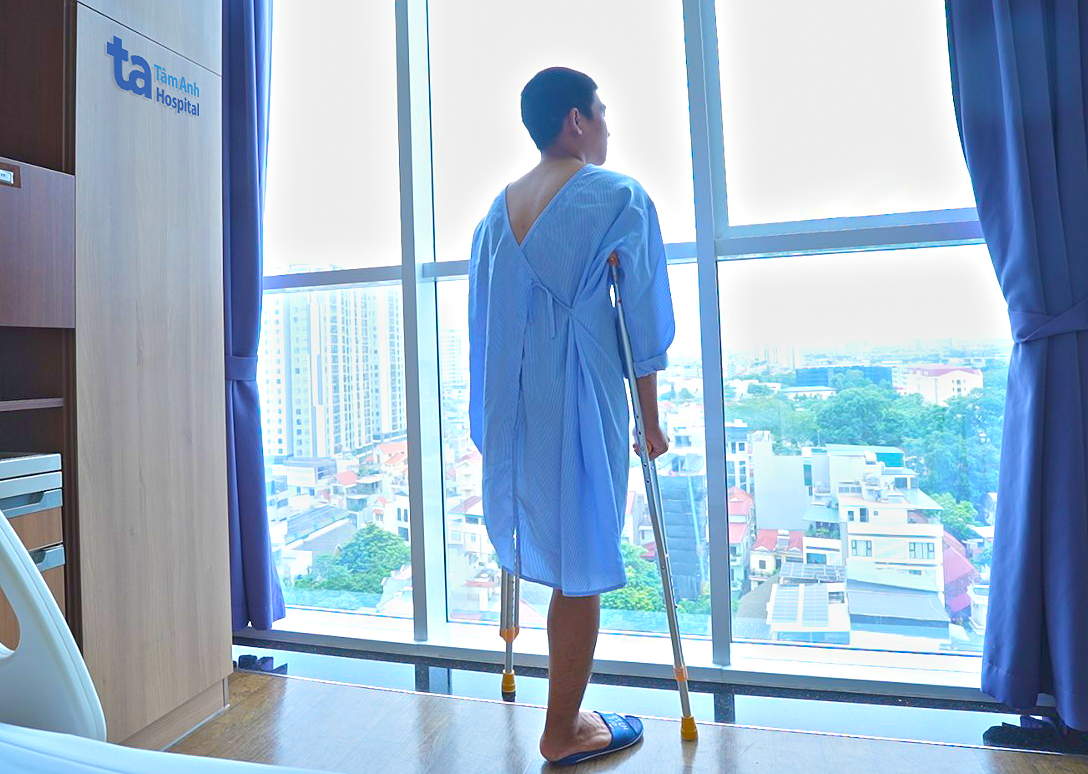 |
Hung walks with crutches. Photo: Tam Anh General Hospital |
"Losing a leg is a significant event and a major challenge, but I will use crutches to go to school until I can get a prosthetic leg," Hung stated.
With a high school graduation exam score of 24,5, the young man is proceeding with the university admission application process as regulated by the Ministry of Education and Training. Hung's first choice is to study mechanical engineering, with the dream of becoming an engineer.
Thanh Long