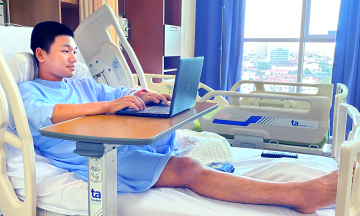
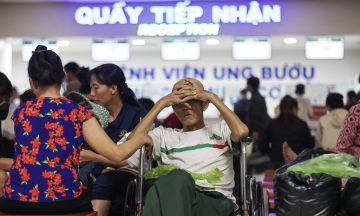
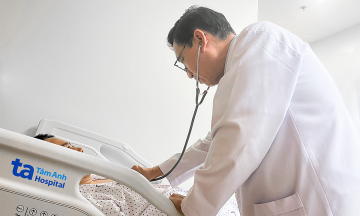
Ms. Hang was diagnosed with uterine fibroids 10 years ago but did not attend regular follow-up appointments. Recently, severe abdominal swelling and persistent dull pain prompted an MRI at Tam Anh General Hospital, TP HCM. The scan revealed numerous, densely clustered uterine tumors, measuring 182x158x106 mm, which were compressing nearby organs.
The medical team at the Obstetrics and Gynecology Center decided on a hysterectomy to remove the tumors and prevent patient complications.
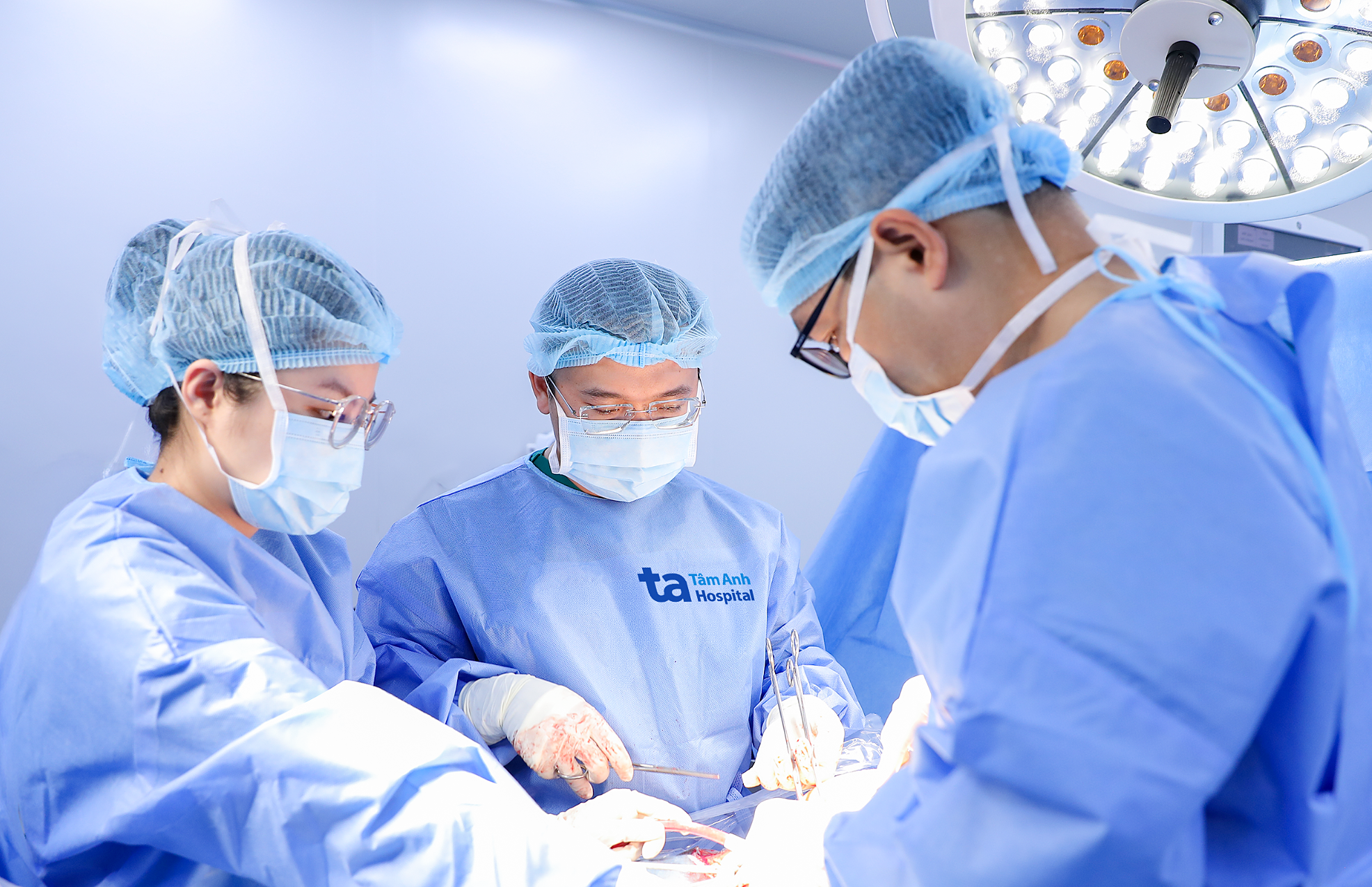 |
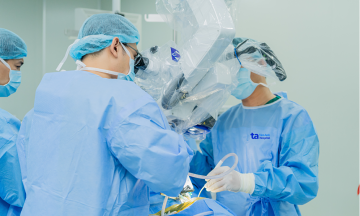
Dr. Ung Quoc Thuong (center) and the team perform uterine fibroid removal for Ms. Hang. *Photo: Tam Anh General Hospital*
Dr. Ung Quoc Thuong, from Tam Anh General Hospital's Obstetrics and Gynecology Center, explained the tumor's size necessitated a vertical abdominal incision, unlike the usual horizontal one, for adequate surgical access. The patient's two prior C-sections had caused significant pelvic adhesions and anatomical changes. Doctors meticulously separated tissue layers to protect the bladder, ureters, and major blood vessels.
The uterus, no longer pear-shaped, was twisted like "a giant snail." Dozens of packed fibroids caused it to weigh nearly 3 kg, 40-50 times larger than normal, adhering to vital pelvic vascular bundles. After more than two hours, the team safely removed the uterus and tumors.
Uterine fibroids are benign tumors arising from the uterus's smooth muscle, common in reproductive-aged women. Most fibroids grow slowly, often without symptoms. However, unchecked growth can lead to menorrhagia, anemia, pelvic pain, constipation, frequent urination, or bladder and intestinal compression.
Dr. Thuong noted, "Few patients develop dozens of fibroids simultaneously over 10 years, deforming the uterus like Ms. Hang's case." This situation significantly increased surgical complexity and complication risks.
Doctors advise women diagnosed with uterine fibroids to avoid complacency and ensure regular follow-up. Prompt medical attention is crucial if symptoms appear, such as rapid abdominal enlargement, persistent abdominal pain, menorrhagia, anemia, difficulty urinating, constipation, or a palpable lower abdominal mass, to intervene before complications arise.
Tue Diem
*The patient's name has been changed.
| Readers can send questions about pregnancy and childbirth here for doctors to answer |