Dr. Chu Tan Si, Head of Neurosurgery and Spine Department at the Neuroscience Center, Tam Anh General Hospital, Ho Chi Minh City, states that herniated discs can be treated with various methods, including medication, physical therapy, lifestyle changes, or pain injections. However, when a herniated disc severely compresses nerve roots or the spinal cord, causing muscle weakness, muscle atrophy, sensory disturbances, cauda equina syndrome, or when conservative medical treatment is no longer effective, surgery becomes a necessary solution.
Initially, patients often experience back pain or pain radiating down the leg. If compression persists, the nerves will suffer from reduced blood supply, lack of oxygen, swelling, and risk irreversible damage. Over time, the myelin sheath protecting the nerve fibers becomes damaged, and nerve cells begin to degenerate, leading to pain, numbness, muscle weakness, muscle atrophy, foot drop, and difficulty walking.
Surgery can relieve nerve compression but cannot revive lost nerve cells. Delaying surgery prolongs the damage, potentially causing permanent nerve cell death. This reduces the chances of recovery after surgery and increases the risk of paralysis, even if the herniated disc is completely removed.
According to Dr. Tan Si, in the past, without modern navigation and nerve monitoring systems, surgery primarily relied on the surgeon's experience and direct anatomical imaging. Complex cases, such as multi-level herniations or severe spinal stenosis, carried a higher risk of nerve damage during surgery. However, modern technology has significantly enhanced the safety of spinal surgery today.
For instance, an AI-integrated neuro-navigation system allows for high-precision 3D anatomical reconstruction and guidance. The K.Zeiss Kinevo 900 microsurgical microscope, also integrated with AI, clearly displays nerves, blood vessels, and damaged tissue. The combination of AI robots and intraoperative neurophysiological monitoring (IONM) assists in surveillance and provides early warnings of potential spinal cord damage, thereby reducing the risk of nerve root complications.
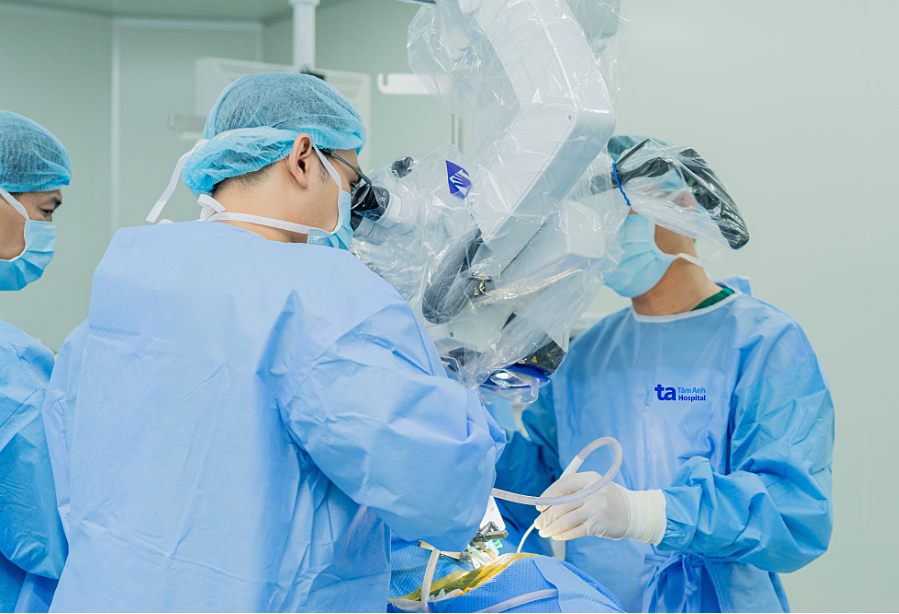 |
Doctors perform surgery on a patient using a modern microsurgical microscope and advanced AI technologies. Photo: Tam Anh General Hospital |
In addition to microsurgery, many herniated disc cases can be treated with UBE two-port endoscopy. This technique precisely removes the herniated disc, minimizes damage to healthy tissue, which in turn reduces post-operative pain, lessens blood loss, and shortens hospital stays.
Doctors advise patients not to miss the "golden window" for treatment due to excessive fear of surgical risks. When signs such as prolonged back pain accompanied by radiating leg pain, numbness, muscle weakness, foot drop, or bladder/bowel dysfunction appear, individuals should consult a neurosurgery specialist for examination and appropriate treatment recommendations.
Trong Nghia