On 25/7, Doctor Le Trung Hieu, Director of the Organ Transplant Center at Military Hospital 108, announced that both recipients had passed the critical stage. The transplanted liver and heart are functioning well post-surgery, and both patients are receiving intensive monitoring and treatment in the Department of Surgical Resuscitation and Organ Transplantation.
Previously, upon receiving information from the National Organ Transplant Coordination Center, the hospital organized inter-hospital and internal consultations to assess the recipients, develop surgical plans, and mobilize personnel. Dozens of doctors were divided into multiple teams, simultaneously executing various tasks. The liver was coordinated from Thanh Nhan Hospital, and the heart from Viet Duc Friendship Hospital.
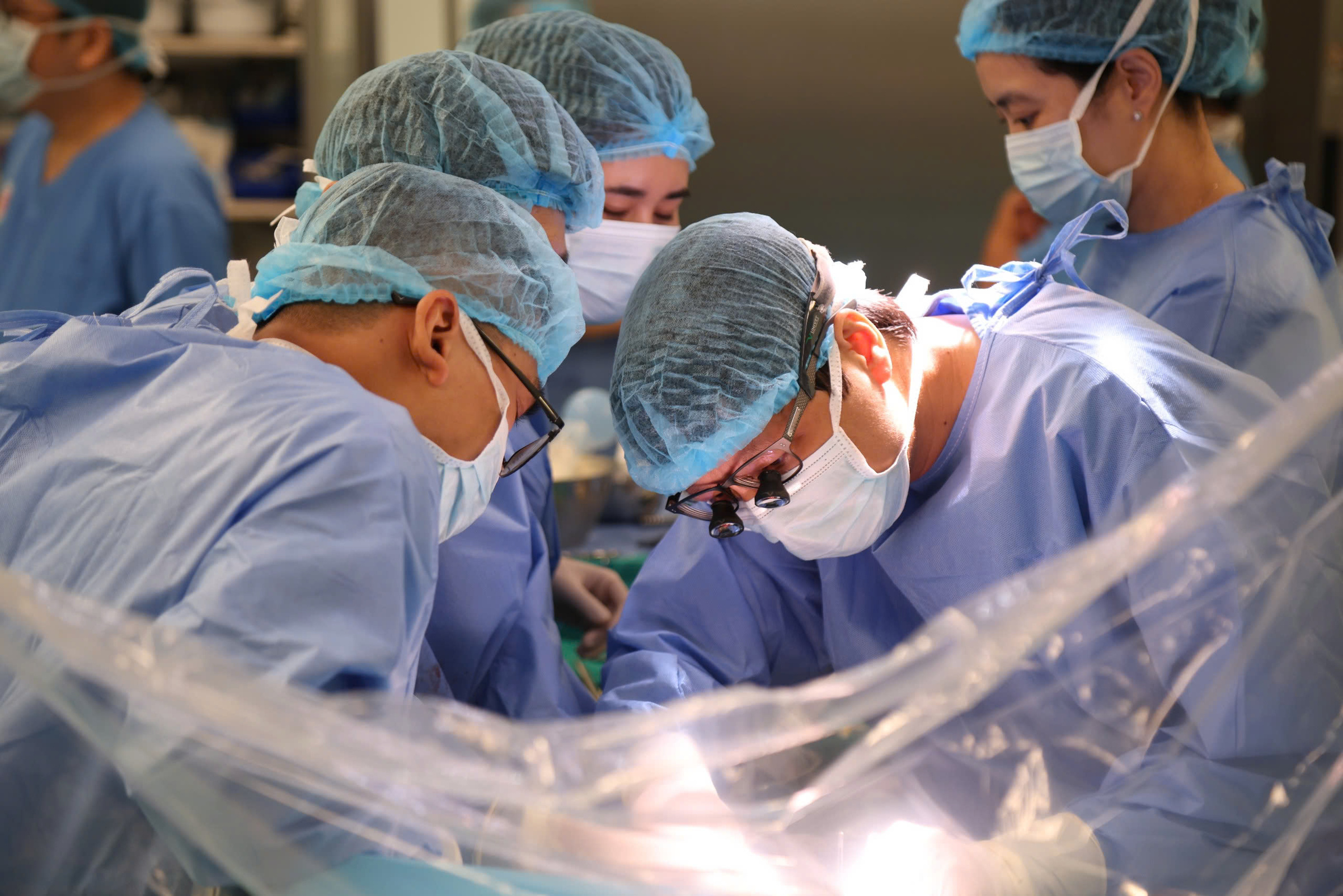 |
The liver transplant team performs organ perfusion and transplantation for a young male patient. *Photo: Lan Huong*
Simultaneously receiving two organs from two brain-dead donors is a rare situation, demanding precise coordination among specialists at every stage, from consultation, organ retrieval, and transportation to transplantation. The primary objective is to maximize the cold ischemia time, which is the period during which organs are preserved in cold conditions after being removed from the donor's body until transplantation into the recipient. This factor is crucial for the quality of the transplanted organ and the patient's recovery. Therefore, the entire process was meticulously planned to minimize this time.
After retrieval, the liver and heart were immediately transported to Military Hospital 108 for transplantation preparation.
This also marked the first time Thanh Nhan Hospital had retrieved organs from a brain-dead donor. Experts from Military Hospital 108 provided direct professional support, collaborating on planning, organizing the process, and managing any unforeseen situations.
"We not only sent surgical and anesthesia teams for organ retrieval, but also collaborated with the hospital to develop professional plans, organize implementation, and handle unforeseen situations," Doctor Hieu stated, adding that a hospital performing organ retrieval from a brain-dead donor for the first time always requires the support of experienced units.
The liver recipient was a 30-year-old male patient suffering from acute liver failure on a background of chronic hepatitis B, a condition where liver function rapidly deteriorates. Before the transplant, the patient had undergone 9 plasma exchanges (filtering toxins from the blood), but his liver function continued to decline, presenting a very high risk of mortality.
According to Associate Professor, Doctor Vu Van Quang, Head of the Department of Hepato-Biliary-Pancreatic Surgery, this was an exceptionally severe case. Despite the patient's young age, his liver failure progressed rapidly and did not respond to intensive medical treatment, putting him at risk of hepatic coma, sepsis, and multi-organ failure. Without a timely transplant, the patient faced a very short survival window.
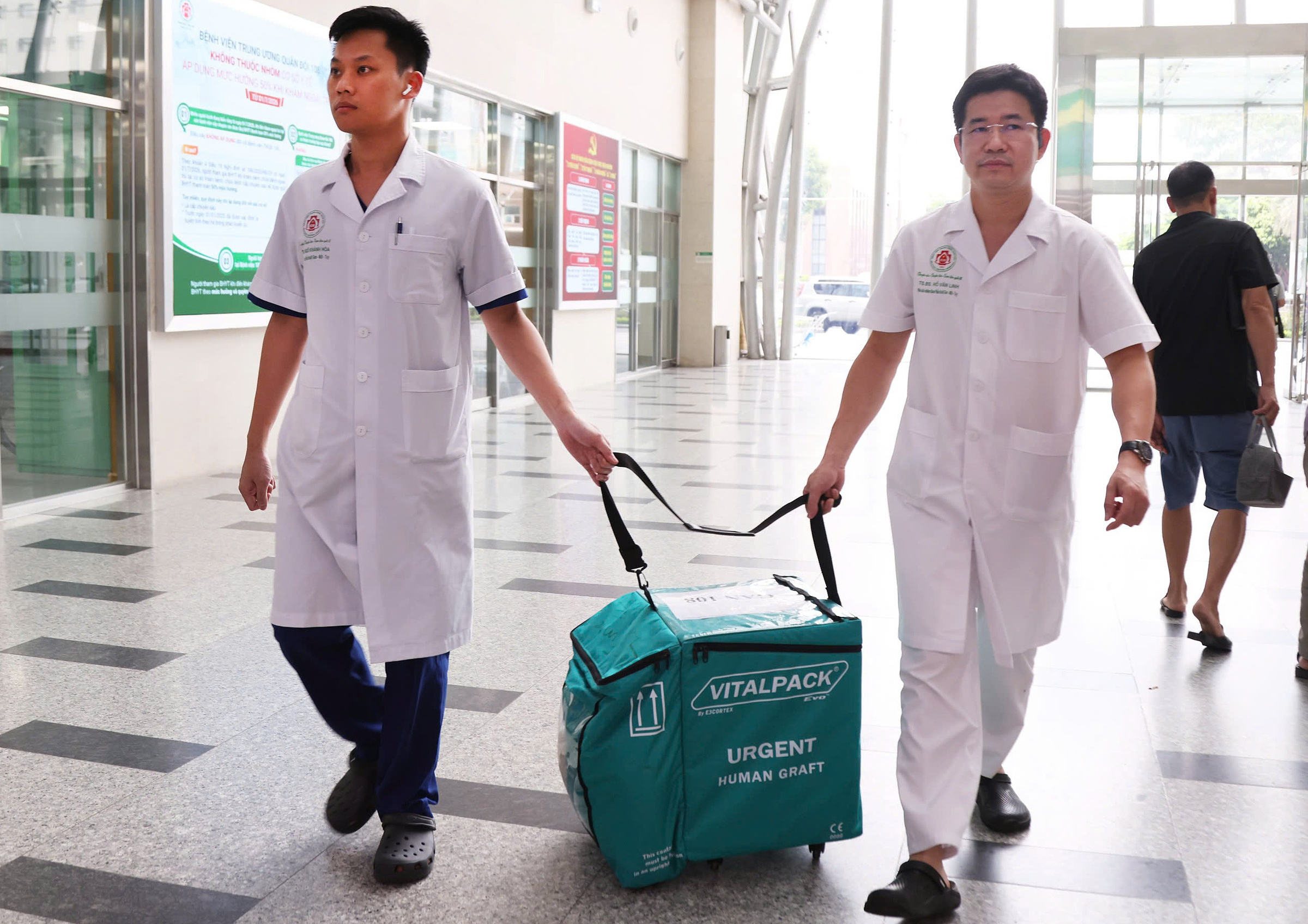 |
Doctors transport organs to Military Hospital 108 for transplantation. *Photo: Lan Huong*
The heart recipient suffered from dilated cardiomyopathy, heart failure stage D, the most severe stage of chronic heart failure. Just one day after the transplant, the patient was weaned off the ventilator and had the endotracheal tube removed, indicating initial stable function of the transplanted heart.
Simultaneously receiving two organs from two hospitals in one day demanded a high level of operational capability and inter-specialty coordination. The success of these two transplant cases reflects Military Hospital 108's organizational, coordination, and complex situation response capabilities in the field of organ transplantation.
Le Nga