Beef provides iron and vitamins, benefiting individuals with high iron needs such as women of menstruating age, pregnant women, or patients recovering from illness.
However, despite its blood-boosting properties, beef is red meat. Daily consumption of red meat can lead to iron overload and excess nutrients. The World Health Organization (WHO) classifies red meat as a probable carcinogen (especially for colorectal cancer) if consumed beyond recommended levels.
Therefore, prioritize cooking methods like boiling, steaming, or quick stir-frying. Limit grilling or deep-frying until charred, as these methods can produce carcinogenic substances. Consume beef with vitamin C-rich fruits and vegetables (oranges, grapefruits, bell peppers, broccoli) to maximize iron absorption.
Combine red meat with other protein-rich foods such as white meat (fish, chicken, duck), legumes, and mushrooms. Drink plenty of water and exercise daily.
According to the National Institute of Nutrition, the appropriate daily intake of red meat for healthy adults is 50-70 grams, equivalent to one to two adult palm-sized portions. This amount may vary based on an individual's gender, age, health status, and physical activity level. If you aim to supplement iron for blood health, consult a doctor for appropriate dosage.
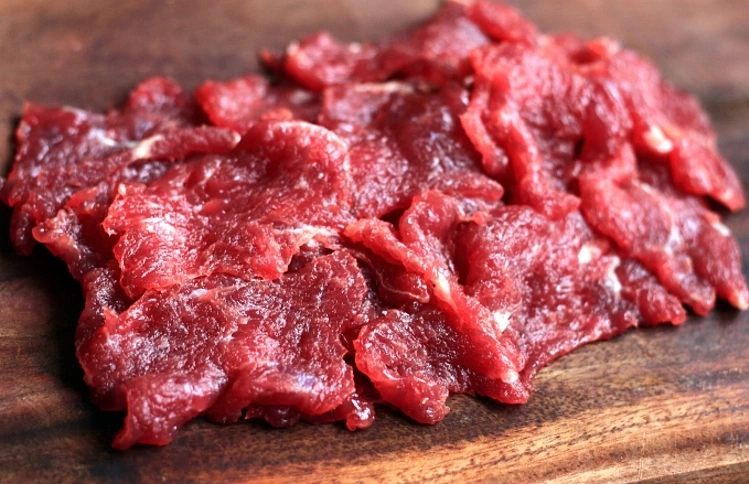 |
Beef is red meat; consume no more than 70 grams per day. *Photo: Bui Thuy* |
Associate Professor Doctor Nguyen Duy Thinh
Former lecturer at the Institute of Biotechnology and Food Technology, Hanoi University of Science and Technology