According to a representative from Elem Formulas, skin brightening in skincare often involves controlling melanin formation and distribution. Active ingredients such as vitamin C, arbutin, niacinamide, AHA, and tranexamic acid are used through various mechanisms, from limiting melanin synthesis and reducing melanosome transfer to promoting surface cell renewal.
Elem Formulas chose to incorporate an approach related to autophagy, the cell's natural "self-cleaning" mechanism. In the context of pigmentation, this approach expands the focus of care from controlling new melanin to addressing existing pigment accumulated within cells.
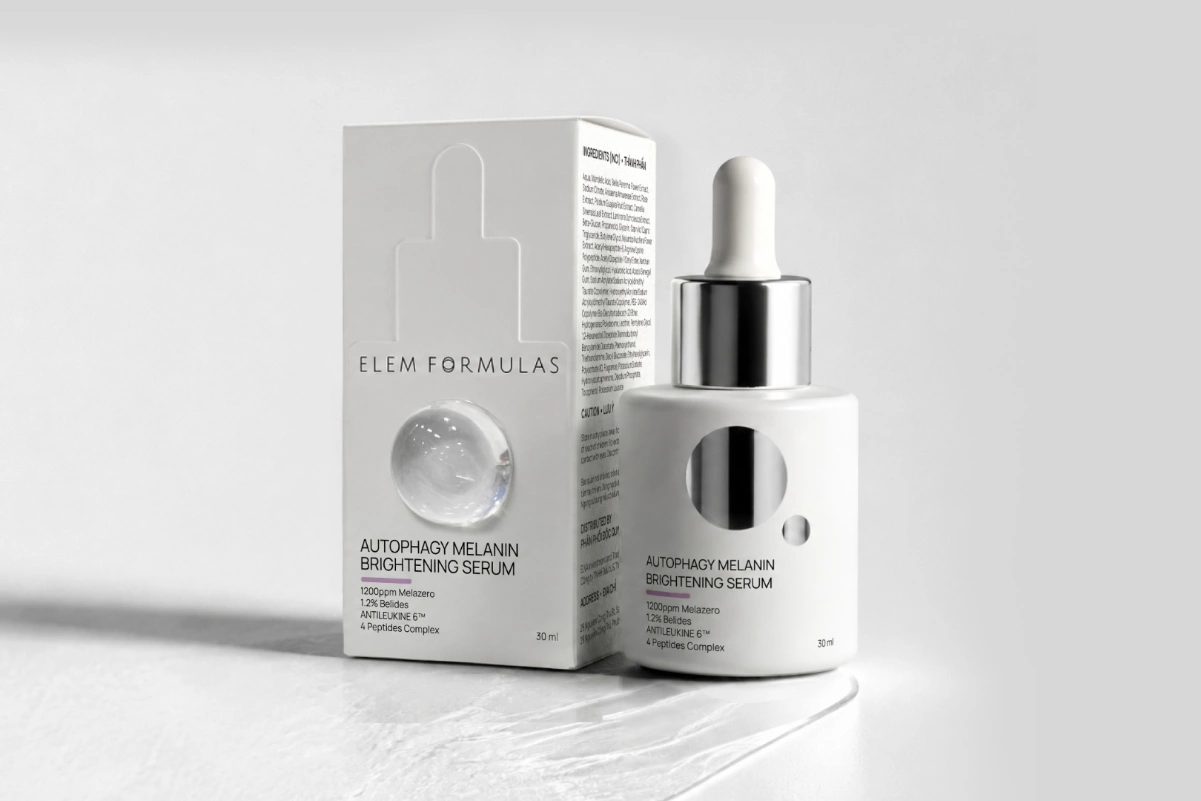 |
The skin brightening and dark spot reducing product from Elem Formulas. *Photo: Elem Formulas* |
Formulating for brighter skin
Melanin is produced inside melanosomes, which are "pigment-containing sacs" within melanocyte cells. These melanosomes then transfer to keratinocytes in the epidermis, contributing to the visible color on the skin's surface. When excessive melanin is produced or unevenly distributed, the skin can develop post-acne dark spots, brown spots, dullness, or uneven tone.
Beyond limiting new melanin formation, another question arises: how are existing melanosomes within cells processed? This is where autophagy becomes relevant.
Autophagy is the cell's natural "self-cleaning" mechanism. Through this process, cells identify, break down, and reuse components that are no longer needed or are in excess. In the context of pigmentation, autophagy is studied for its ability to process formed melanosomes. When this process selectively targets melanosomes, it is also known as melanophagy.
Autophagy's role in processing melanosomes makes it a significant link in pigmentation research. This understanding forms the basis for Elem Formulas' choice of Melazero as the core ingredient in its Autophagy Melanin Brightening Serum.
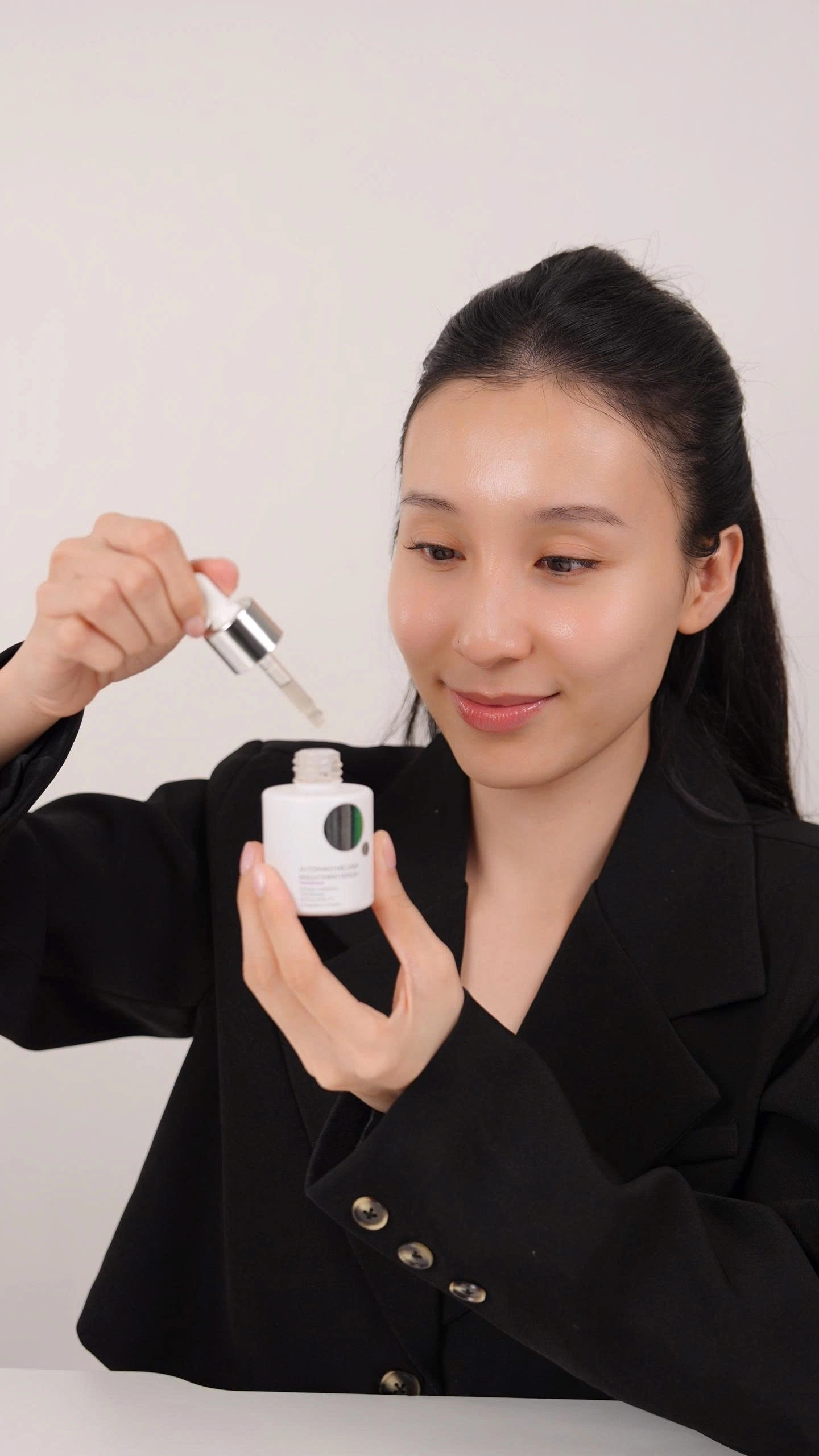 |
Users experiencing the product. *Photo: Elem Formulas* |
According to brand materials, Melazero is a core ingredient Elem Formulas uses to help activate autophagy. Instead of only addressing pigmentation at the formation stage, Melazero aims to boost cellular mechanisms involved in processing existing melanosomes, thereby helping reduce melanin accumulation in cells.
In addition to this action, Melazero is also presented by its raw material supplier for its ability to impact various factors related to the pigmentation process, such as tyrosinase, TRP-1, TRP-2, and MITF. The formula simultaneously combines Belides ORG, an organic daisy extract, which helps limit the formation and spread of new melanin.
Melazero and Belides ORG thus fulfill two complementary roles: helping process accumulated pigment and limiting the continued formation of new pigment.
Supporting pigment control and skin recovery
Alongside Melazero and Belides ORG, the Autophagy Melanin Brightening Serum also incorporates Antileukine 6, Peptide Complex, and Beta Glucan to support the skin's foundation during pigmentation care.
Brand materials indicate that Peptide Complex is designed to reinforce the skin's protective barrier, improve elasticity, and support anti-aging. The use of peptides in pigmentation-related formulas also stems from a multi-target approach.
Beta Glucan helps soothe and support the recovery of damaged skin, while also supporting the microbiome. Meanwhile, Antileukine 6 is intended by the brand to help reduce inflammation, protect the skin from environmental stressors, and limit signs of aging.
This combination creates two functional groups within the same formula. The first group focuses on pigmentation, with Melazero and Belides ORG supporting different stages of melanin formation and processing. The second group targets the skin's foundation, with Peptide Complex, Beta Glucan, and Antileukine 6 supporting the protective barrier, soothing, and maintaining skin stability.
According to an Elem Formulas representative, this approach underpins the brand's philosophy of "re-establishing a healthy skin foundation," rather than merely focusing on short-term brightening effects. The formula is designed so that pigment improvement goals align with skin recovery and protection.
Pigmentation is influenced by many factors, not just UV rays. Post-acne inflammation, prolonged irritation, excessive treatments, or a weakened protective barrier can all generate signals related to melanin production.
This means pursuing brightening efficacy while causing continuous irritation can become an unfavorable cycle for the skin. Therefore, in addition to targeting pigmentation, maintaining hydration, soothing, strengthening the protective barrier, and sun protection are also crucial factors in skincare.
According to the brand representative, this is also why Elem Formulas does not frame the Autophagy Melanin Brightening Serum as merely "melanin inhibition." The formula is developed with a multi-mechanism approach, combining pigment control with support for skin foundation recovery.
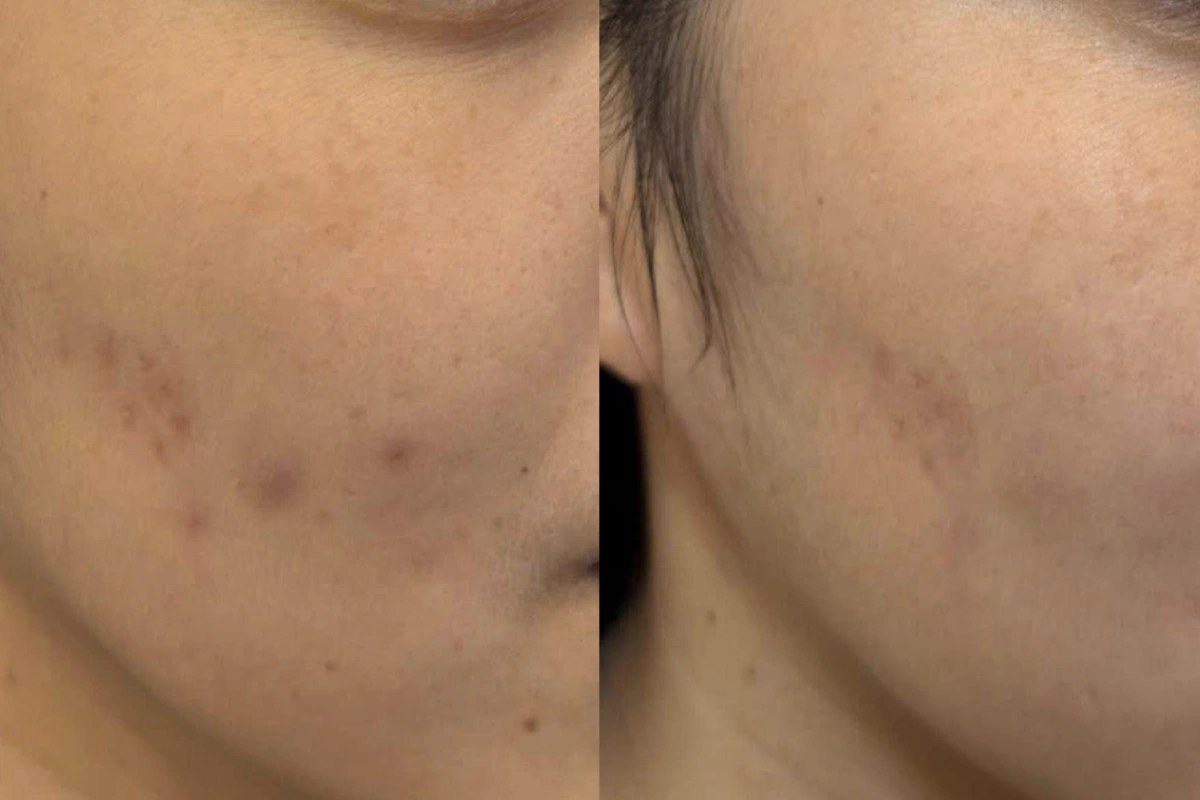 |
Before and after 14 days of using Elem Formulas skin brightening and dark spot reducing cream. *Photo: NVCC* |
Brand materials indicate that before and after images taken over 14 days of use were recorded to monitor factors such as brightness, evenness of tone, and the overall condition of the skin's foundation. Efficacy may vary depending on individual skin condition and constitution.
Thai Anh
Learn more about Elem Formulas:
Elem Formulas is a science-oriented skincare brand focused on applying active ingredients and technology to address skin concerns through multi-mechanism approaches. The brand pursues the philosophy of "re-establishing a healthy skin foundation," aiming for improved skin efficacy alongside the ability to restore, balance, and maintain long-term stability.
Elem Formulas develops formulas that prioritize efficacy, tolerability, and user experience, suitable for modern skincare needs, including sensitive skin or skin undergoing recovery.
The organization responsible for bringing the product to market is Elva Investment and Trading Company Limited.
- Website: here.
- Fanpage: here.
- Address: Elva Tower, 211 Tran Nao Street, An Khanh Ward, TP HCM.