After age 40, muscle mass and strength tend to gradually decline without consistent maintenance. Bones also require regular stimulation to remain strong. Therefore, rather than decreasing physical activity, adjusting exercise habits to suit your body's needs can be highly beneficial.
Adapt, don't reduce, your workout
Reaching age 40 does not mean your body needs less activity. On the contrary, maintaining regular physical activity remains crucial for cardiovascular health, muscle strength, bone density, and overall mobility. According to Everyday Health, exercise for middle-aged individuals should encompass endurance, strength, and weight-bearing exercises, rather than focusing solely on one type of activity.
For strength training, it is crucial to tailor your approach to your body's capabilities, personal goals, and recovery time.
Prioritize full-body exercises
Compound movements such as squats, deadlifts, lunges, rows, and split squats engage multiple muscle groups simultaneously. These exercises build functional strength and make your workout time more efficient. They also closely resemble everyday activities like standing up, sitting down, lifting, pulling, or pushing.
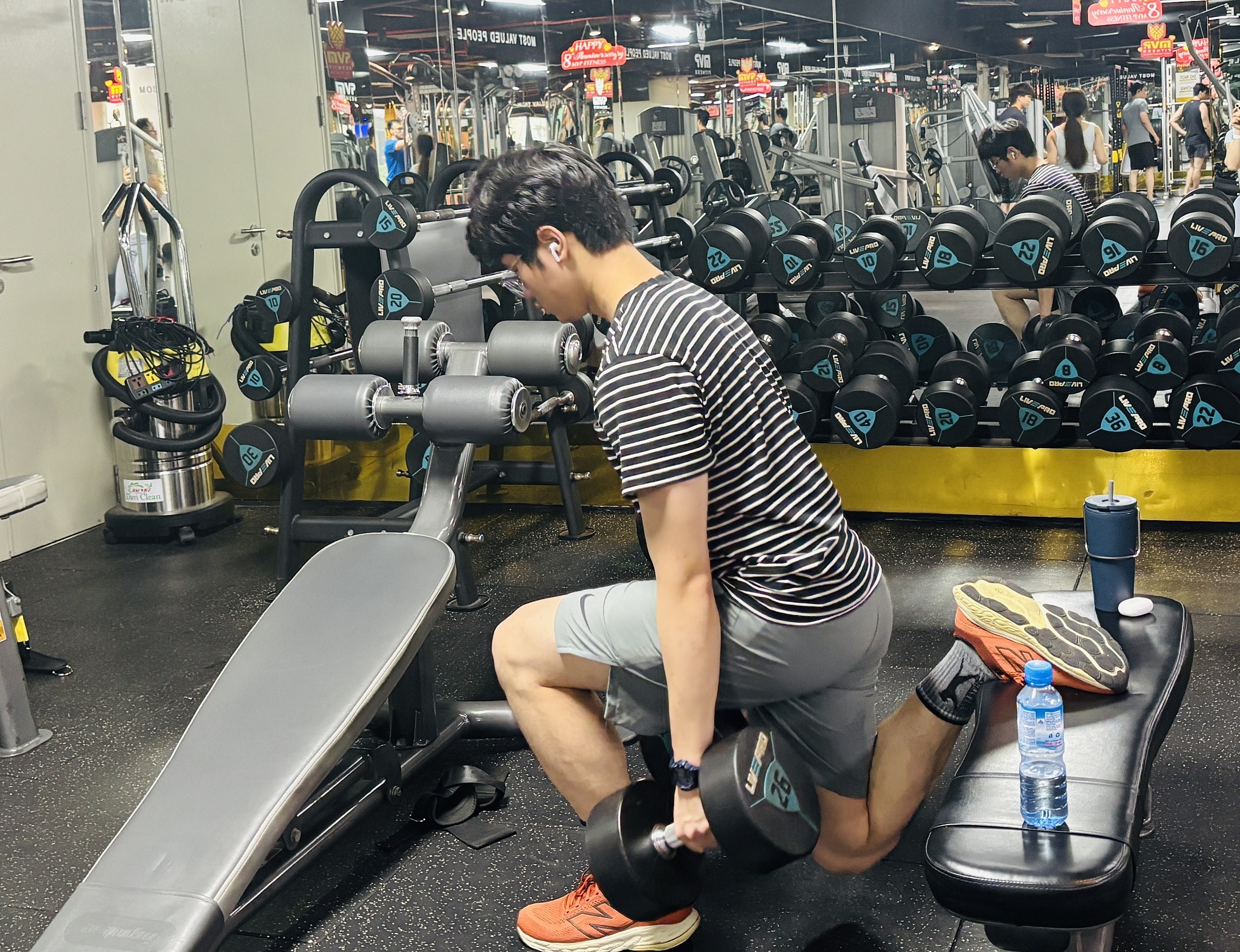 |
A split squat is a strength exercise that develops leg muscles and improves balance. *Bao Bao*
Beginners should start with bodyweight exercises, such as squats, lunges, or push-ups, to master the movements and proper technique before adding weights or increasing difficulty.
Gradually increase intensity
Muscles require consistent challenges to adapt and grow, but intensity should not be increased too rapidly. Gradually increase weight, repetitions, or adjust the speed of movements once your body has adapted to the current level. According to Eat This Not That, once comfortable with the exercises, implement progressive overload by lifting heavier weights, increasing repetitions, or making exercises more challenging. This incremental increase must be done step-by-step, always maintaining correct technique to prevent injury.
Combine with other exercise types
While strength training is crucial for muscle maintenance, it should not completely replace other forms of physical activity. Combining strength training with aerobic activities, cardio workouts, or other weight-bearing exercises can further support overall health in middle age.
Prioritize consistency over overexertion
Inconsistent training, interspersed with very heavy sessions, can be difficult to sustain long-term. Individuals over 40 should establish an exercise schedule that aligns with their available time and recovery capacity, as muscle and strength progress accumulate over many weeks and months.
Dedicate time to recovery
After age 40, recovery should be considered an integral part of your training program. Adequate sleep, proper nutrition, rest days, and light activity provide the body with essential time to repair and adapt after workouts.
Additionally, ensure sufficient protein intake to support muscle repair and growth. However, specific protein requirements depend on individual weight, activity level, age, and health status; a fixed amount should not be applied universally.
Bao Bao (Compiled)