Children using phones and tablets for learning and entertainment is increasingly common. However, if a child finds it difficult to disengage from screens, reacts strongly when limits are imposed, or neglects other activities, they may be overly dependent on these devices.
Irritability when denied access
According to Parents, an easily recognizable sign is a child's strong reaction when parents ask them to turn off electronic devices. Children may cry, scream, become angry, argue, or repeatedly ask for more time.
It is normal for children to be annoyed when they have to stop a favorite game. However, if these reactions become increasingly intense, frequent, and turn setting limits into a prolonged argument, parents should not overlook it.
Reduced physical activity and social interaction
Children who spend excessive time in front of screens will have fewer opportunities to run, play sports, meet friends, or participate in family activities. They often prefer to sit alone with their device rather than go outside to play. Prolonged reduction in physical activity and direct interaction is detrimental to a child's physical development and social skills.
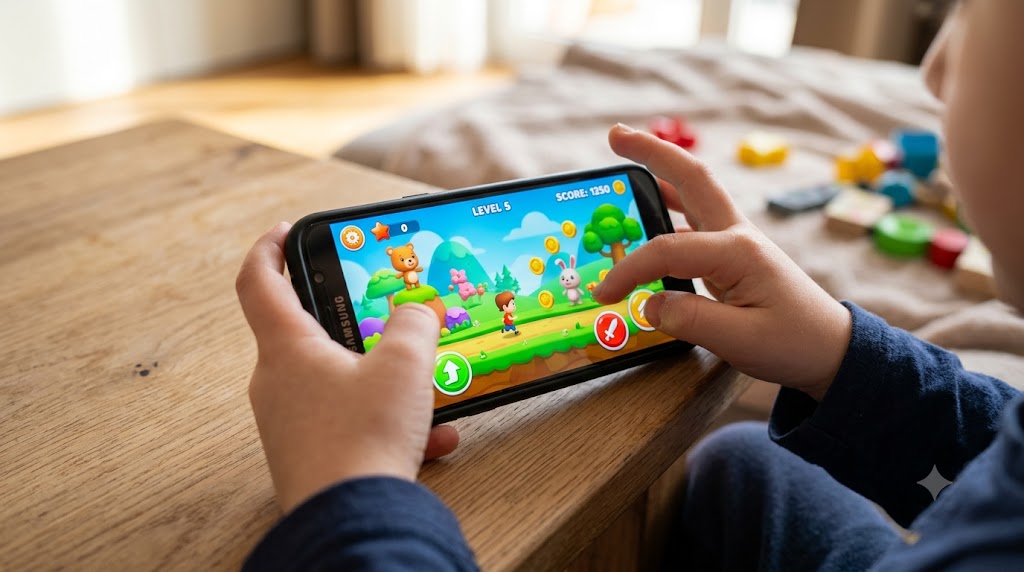 |
Children spending time on screens affects brain and physical development. AI-generated photo. |
Devices as the sole coping mechanism
When feeling sad, bored, angry, or having to wait, children immediately demand a phone to watch videos or play games, and quickly calm down afterward. If this pattern repeats often, children may develop a habit of turning to phones and tablets to soothe uncomfortable emotions, rather than learning how to express and regulate their feelings.
According to Times of India, excessive use of electronic devices can impact a child's health and development. Children may experience eye strain, reduced physical activity, and difficulty concentrating on studies. Children under two years old should avoid devices entirely. For children aged two to five, usage should be limited to a maximum of one hour per day, with strict parental control to protect their health.
Parents should agree on device usage times with their children, and provide advance warnings when time is almost up, allowing children to proactively end their activity. Phones should not be used as the only way to comfort a child when they are sad or irritable. Instead, children should be encouraged to talk, read books, engage in physical activity, and play with family. Adults also need to set an example by limiting their own device use during meals or conversations with their children.
Le Nguyen (compiled)
| Readers can submit questions about child illnesses here to be answered by doctors. |