On 22/8, authorities in Kangbao county, Zhangjiakou city, Hebei province, confirmed that some local traders intentionally dipped Chinese cabbage stalks into industrial formaldehyde solution. This practice aimed to keep the vegetables fresh longer during long-distance transport. The incident is currently under investigation.
Formaldehyde is an absolutely prohibited substance in food production and processing under Chinese regulations. The International Agency for Research on Cancer (IARC), a part of the World Health Organization (WHO), classifies formaldehyde as a Group 1 carcinogen, meaning it is definitely carcinogenic to humans. It is commonly used in textile dyeing, disinfection, or embalming.
Despite the Food Safety Law, enacted by authorities in 2009 and revised multiple times to become one of the strictest in history, similar incidents have persisted for the past 14 years.
Previously, in 2012, traders in Qingzhou, Shandong province, were found spraying Chinese cabbage with formaldehyde solution to preserve freshness. Over 120 tons of formaldehyde-contaminated cabbage were also seized in Guangzhou.
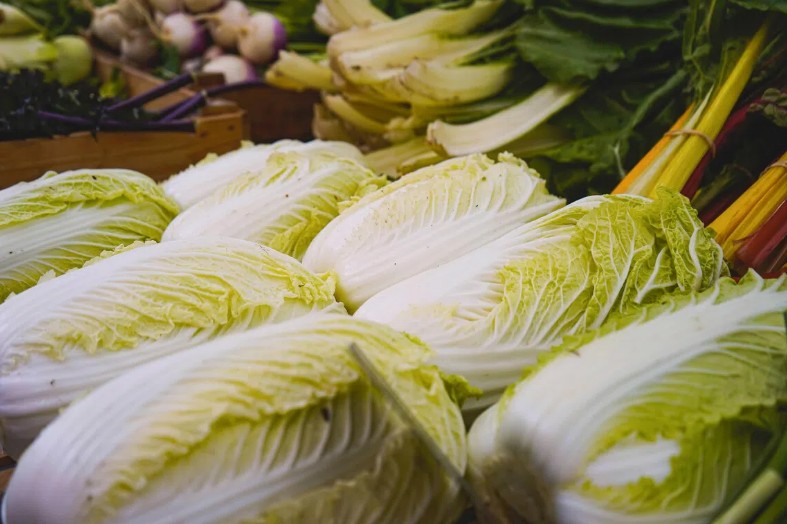 |
Chinese cabbage. Illustration: Unsplash |
Surveys of many small traders and agricultural experts indicate that the core reason unscrupulous traders disregard the law is the stringent cost issue within the supply chain, as reported by The Paper. Chinese cabbage spoils quickly in summer, while the cost of specialized cold chain transport is too expensive compared to the low value of the vegetable.
Mr. Zhang, a wholesale trader in Xinjiang, explained that dipping cabbage in chemicals stems from a desire to avoid natural spoilage losses and extend the selling period for profit. Sharing this view, Mr. Wang, head of an aquaculture cooperative in Guizhou province, stated that clandestine formaldehyde treatment keeps Chinese cabbage fresh for two to three additional days after reaching its destination, eliminating the need for costly cold transport.
Meanwhile, Mr. Gao, owner of an ecological farm in Huzhou, Zhejiang province, further explained that Chinese cabbage often suffers root damage after harvest, making it susceptible to bacterial rot. Dipping the roots in formaldehyde instantly kills bacteria and prevents spoilage. A survey on e-commerce platforms by The Paper also revealed that a 2-liter can of 36-38% formalin solution costs only 50 yuan, further intensifying the profit motive.
Beyond profit, "blind spots" in control procedures enable such violations to persist. Currently, routine rapid tests at wholesale markets focus only on pesticide residues and heavy metals.
Professor Huang Yanzhong, a global health expert at the Council on Foreign Relations, told the BBC that formaldehyde, being an industrial chemical, is not included in standard testing lists.
A representative from an inspection station in eastern China admitted that the overwhelming number of unregulated chemicals makes it impossible for specialized agencies to include all of them in routine testing. For the past 17 years, despite being on the prohibited list, formaldehyde has never been a mandatory testing parameter for vegetables. Unscrupulous traders also exploit the chemical's volatile nature and the authorities' habit of only sampling leaves to erase traces.
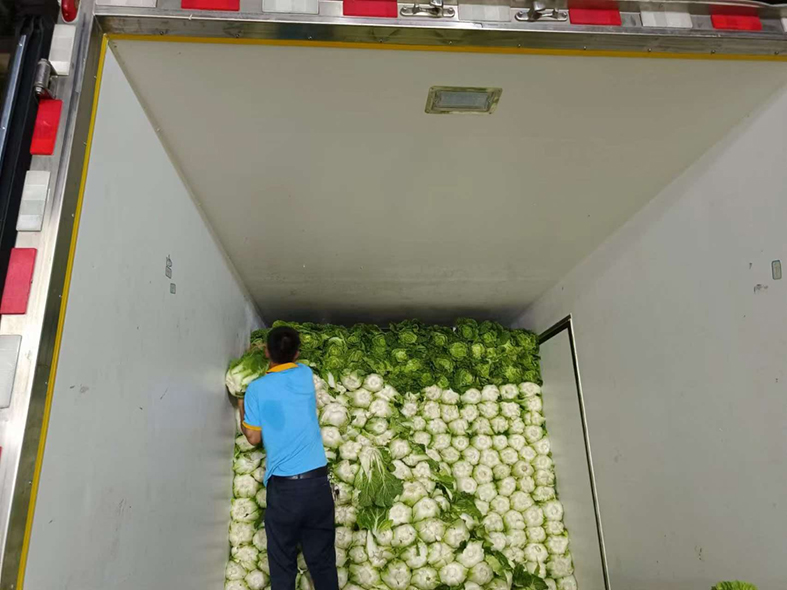 |
Mr. Wang stated his cooperative uses refrigerated trucks to transport Chinese cabbage. Photo: The Paper |
Fragmentation within the regulatory apparatus creates additional "grey areas" of responsibility. The agricultural sector oversees cultivation, while market regulatory agencies only control consumption. The intermediate processes of procurement, loading, unloading, and inter-provincial transport fall into a gap with no direct oversight. At the local level, shortages of personnel and funding, combined with a reluctance among local authorities to expose wrongdoing, exacerbate supervision deficiencies.
This incident directly impacts international markets, as China exports large quantities of agricultural products to Asia. The Korea Food and Drug Safety Agency immediately began working with partners to review imported goods, as South Korea relies on China for 40% of its kimchi cabbage supply. Japanese authorities also initiated reviews and have not yet recorded any non-compliant consignments arriving at their ports.
Experts suggest that China needs to promptly add toxic industrial chemicals to the mandatory inspection list at wholesale markets. They also recommend tightening management of intermediate transport. The state should expand cold chain logistics infrastructure and subsidize agricultural product transport, supporting large-scale farming cooperatives to eliminate small-scale fraudulent links.
Binh Minh (According to BBC, The Paper, Med Sci, CCTV News)