Eng English
China 中国人

Eng English
China 中国人
  • News
  • World
  • Business
  • Entertainment
  • Sports
  • Law
  • Education
  • Health
  • Lifestyle
  • Travel
  • Science
  • Digital
  • Automobiles
  • Trở lại Thể thao
  • Health
Sunday, 15/2/2026 | 08:01 GMT+7

Tet's sweet temptations: a hidden trap for diabetics

Jams, candies, pastries, and sugary drinks, abundant during Tet, contain high amounts of simple sugars but offer little nutritional value. Frequent consumption can lead to acute blood sugar spikes, contribute to weight gain, increase insulin resistance, and cause dyslipidemia.

The Tet holiday, a time for family reunions, often features lavish traditional meals with banh chung, an array of sweets, and sugary beverages. However, for individuals living with diabetes, this period presents a sensitive challenge, as dietary routines are easily disrupted, increasing the risk of blood sugar imbalances and potential complications. Behind the seemingly harmless invitations to "eat for fun" or "just try a little" lies a "sweet trap" that can make managing the condition much more difficult.

Dr. Nguyen Thi Minh Thu, from the National Endocrine Hospital, advises patients that while complete abstinence during Tet is not necessary, it is crucial to clearly identify food groups that should be limited to proactively protect their health.

One of the primary food groups that can cause rapid blood sugar increases is refined starches. Dishes such as banh chung, banh tet, xoi (sticky rice), and che (sweet soup), which are traditional spring delicacies, contain significant amounts of glutinous rice and starches with a high glycemic index. Consuming these in large portions, especially during meals rich in protein and fat, can lead to sharp post-meal blood sugar spikes. Patients should opt for smaller servings, pairing them with green vegetables and lean protein to slow down glucose absorption, and avoid consuming many starch-heavy dishes in a single meal.
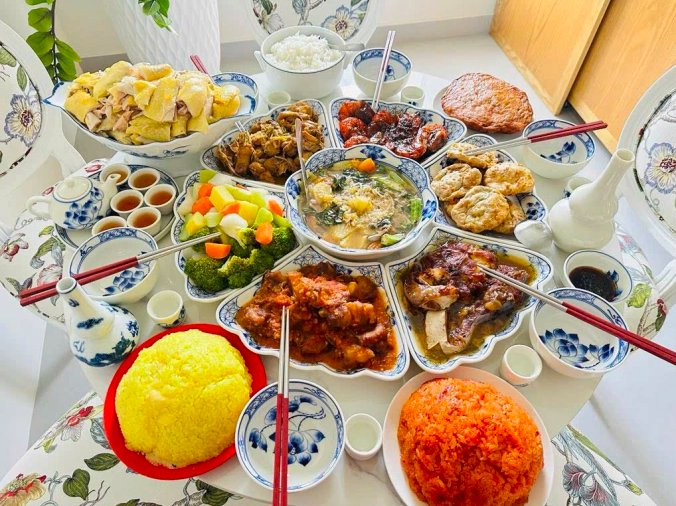
A Tet meal. Photo: Thu Ha

A Tet meal. Photo: Thu Ha

Even more concerning is the category of high-sugar foods, which represents the most significant "sweet trap" of Tet. Jams, candies, pastries, carbonated soft drinks, milk tea, and bottled fruit juices are laden with simple sugars yet offer minimal nutritional value. Regular consumption not only causes acute blood sugar increases but also contributes to weight gain, elevated insulin resistance, and dyslipidemia.

Many believe that "a little of each" is safe, but when accumulated over several days, the total sugar intake can far exceed controlled levels. Patients should prioritize fresh, less sweet fruits in moderate quantities, minimize sugary beverages, and avoid continuous snacking habits.

Beyond sugar, foods rich in saturated fats and cholesterol, such as fried spring rolls (nem ran), stir-fried pork hock (gio xao), braised pork (thit kho), chicken skin, and organ meats, also pose risks. Excessive consumption over consecutive days can worsen insulin resistance, lipid disorders, and elevate the risk of cardiovascular disease, a common complication for people with diabetes. Choosing fish, lean meats, and tofu instead of fatty, fried dishes can help reduce the metabolic burden.

High-salt foods, including pickled onions (dua hanh), pickled eggplant (ca muoi), salted meats (thit muoi), dried goods, and processed foods, also require careful management. Individuals with diabetes face a higher risk of developing hypertension and kidney disease. Prolonged high salt intake during Tet can increase the strain on the cardiovascular system and kidneys, impacting long-term disease control.

Experts recommend that patients maintain a balanced diet, eat smaller, more frequent meals, avoid skipping meals, and refrain from "making up" for missed food after parties. More frequent blood sugar monitoring throughout the Tet holiday will enable timely adjustments to diet and medication, as guided by their doctor.

Tet is a time to enjoy family togetherness, but it is not a "holiday" from health care. Proactively avoiding "sweet traps", eating mindfully, and maintaining good blood sugar control will help people with diabetes celebrate a safe, healthy, and fulfilling spring.

By Le Nga

By VnExpress: https://vnexpress.net/bay-ngot-ngao-voi-nguoi-tieu-duong-dip-tet-5041250.html
Tags: Tet holiday diabetes diabetic

News in the same category

Seven health benefits of eating shrimp you might not know

Seven health benefits of eating shrimp you might not know

Shrimp is a low-mercury seafood, providing high-quality protein and many important micronutrients, and can be safely consumed in about two meals (240 g) per week.

Tet holiday diet: 'excess protein, insufficient fiber' harms the urinary system

Tet holiday diet: 'excess protein, insufficient fiber' harms the urinary system

Consuming excessive meat, fish, and alcohol while lacking vegetables during the Tet holiday can overload the urinary system, raising the risk of stone formation and infections.

Ministry of health warns of 'nerve-damaging' toxin in fermented, canned foods

Ministry of health warns of 'nerve-damaging' toxin in fermented, canned foods

Following a severe suspected poisoning case linked to fermented fish in Da Nang, the food safety authority advises people to prioritize freshly cooked meals and avoid self-packaging food for long-term storage at room temperature.

Doctors return to hospital for emergency liver transplant, saving critically ill patient while on Tet holiday travel

Doctors return to hospital for emergency liver transplant, saving critically ill patient while on Tet holiday travel

Many doctors and nurses from Military Hospital 108, already home or en route for Tet celebrations, turned back to Hanoi to save a critically ill patient requiring an immediate liver transplant.

Four Tet holiday habits that can cause dry eyes

Four Tet holiday habits that can cause dry eyes

Excessive phone and television use, insufficient sleep, inadequate hydration, and frequent eye rubbing are common habits during the Tet holiday that can lead to dry eyes.

Four principles to prevent food poisoning in children during Tet

Four principles to prevent food poisoning in children during Tet

Cooking thoroughly, proper food storage, and teaching children to wash hands before eating help prevent food poisoning during Tet.

Warning signs of heart attack after parties

Warning signs of heart attack after parties

Chest pain or discomfort, dizziness, and sweating can be dangerous warning signs of a heart attack after a party, requiring immediate hospital visit.

What pregnant mothers should eat and avoid during Tet?

What pregnant mothers should eat and avoid during Tet?

Pregnant mothers should consume only about 100 g of banh chung a day, increase green vegetables, and avoid sugary drinks to limit weight gain and high blood sugar, which can affect fetal development.

Is eating a lot of fried spring rolls good for health?

Is eating a lot of fried spring rolls good for health?

Fried spring rolls are delicious, crispy, and rich in calories and some nutrients like protein and fiber, but they also contain high amounts of sodium and fat. Consuming too many can negatively affect blood pressure and cardiovascular health.

Should you wash eggs before refrigerating them?

Should you wash eggs before refrigerating them?

Taiwanese nutritionist Yang Sihan warns that washing eggs immediately after purchase can damage the protective cuticle layer on the shell, allowing bacteria to penetrate and causing eggs to spoil faster.

Eng English
China 中国人
  • News
  • World
  • Business
  • Entertainment
  • Sports
  • Law
  • Education
  • Health
  • Lifestyle
  • Travel
  • Science
  • Digital
  • Automobiles
FPT Tower, 10 Pham Van Bach Street, Dich Vong Ward,
Cau Giay District, Hanoi, Vietnam
Email: contacts@vnportal.net
Tel: 028 7300 9999 - Ext 8556
Advertise with us: 090 293 9644
Register
© Copyright 2026 vnnow.net. All rights reserved.
Terms of use Privacy policy Cookies