A recent CT scan at Tam Anh General Hospital Ho Chi Minh City revealed a 2,3 cm segment of Ms. Thanh's trachea, located in the middle one-third, severely narrowed by 87%. The tracheal lumen measured just 3,6x8,7 mm, significantly smaller than the normal range of 10-21x13-15 mm. Her left lung had completely collapsed, leaving only one lung to facilitate oxygen exchange.
According to Associate Professor, Doctor Vu Huu Vinh, Director of the Thoracic-Vascular Center, Ms. Thanh's trachea was reduced to a narrow slit for air passage. Any additional swelling or phlegm accumulation could quickly lead to acute respiratory failure.
Doctor Vinh explained that tuberculosis bacteria damage the airway lining, cause necrosis of bronchial cartilage, and stimulate scar tissue formation. Over time, this scar tissue contracts, progressively narrowing the tracheal and bronchial lumens and obstructing airflow. Following a consultation, the medical team decided to perform reconstructive surgery on the stenotic tracheal segment to clear the patient's airway.
Doctor Phan Quoc Thai, from the Anesthesiology and Resuscitation Department at Tam Anh General Hospital Ho Chi Minh City, stated that the patient received anesthesia via a laryngeal mask instead of conventional endotracheal intubation. This approach minimized the risk of further narrowing the tracheal lumen and blocking the airway. It also ensured a continuous oxygen supply to the brain and other organs while the airway was interrupted during the resection and rejoining of the narrowed tracheal segment.
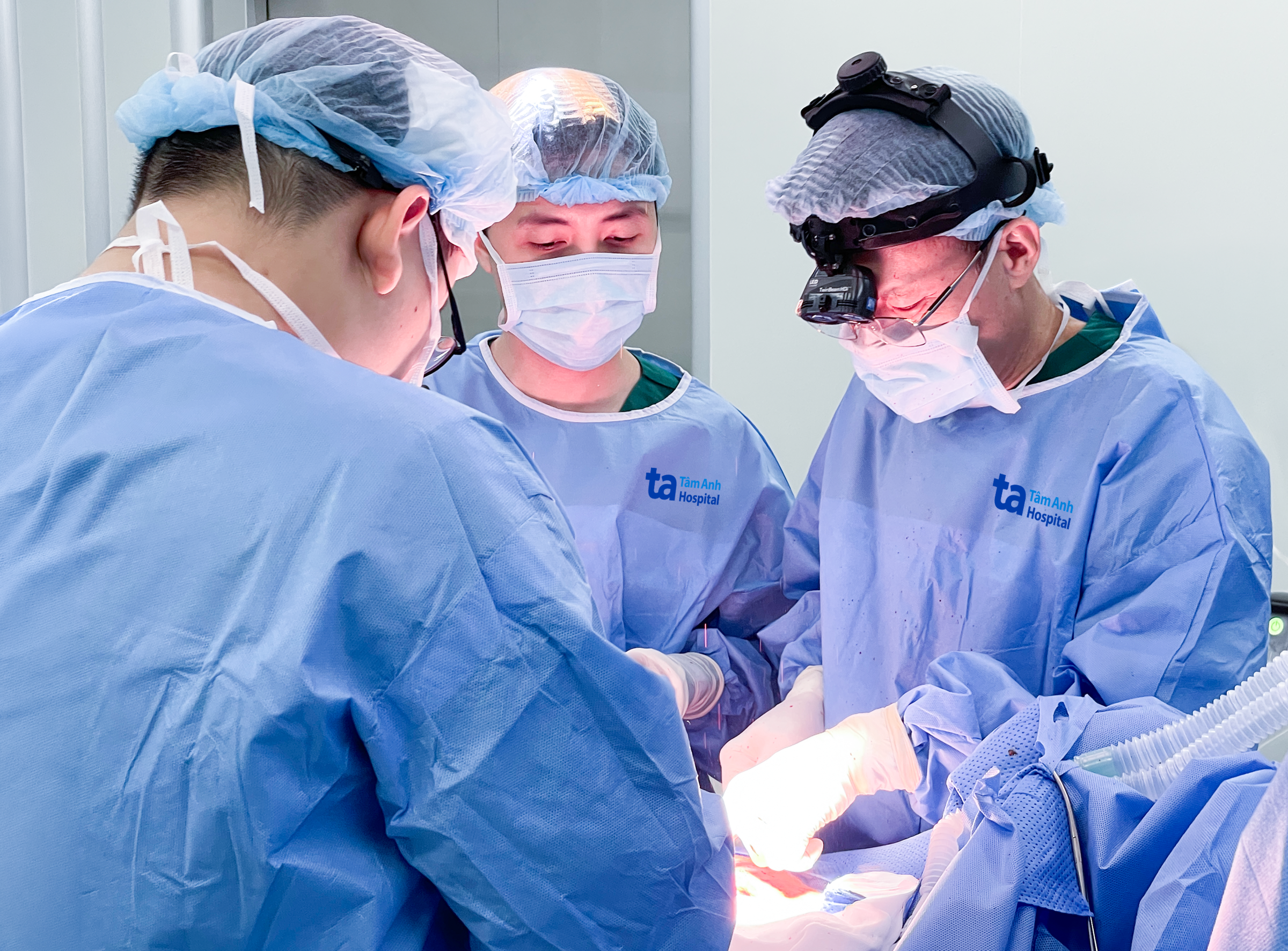 |
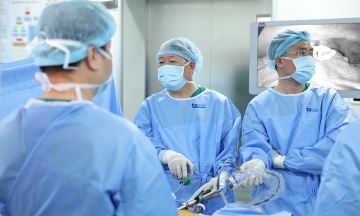
Associate Professor Vinh (right) performs tracheal reconstruction surgery for the patient. Photo: Tam Anh General Hospital
Doctor Vinh performed a tracheotomy, resected the narrowed segment caused by fibrous tissue, and inserted a direct ventilation tube into the distal trachea to maintain respiration. The anesthesia team coordinated the adjustment of the endotracheal tube, ensuring continuous ventilation throughout the operation. Once vital signs stabilized, doctors reconstructed the trachea using a sliding technique and re-inserted the endotracheal tube orally.
Post-surgery, doctors sutured the patient's chin to her chest to reduce tension on the tracheal anastomosis. She received pain relief and was monitored in the intensive care unit (ICU), with the stabilizing sutures removed after four days.
One week after the surgery, Ms. Thanh's pain decreased, and her shortness of breath and chest tightness improved. She was able to consume liquid food. Once her health stabilizes, the team plans to address the obstructed left bronchial segment to restore her respiratory function as much as possible.
Doctor Vinh advises patients who have completed treatment for pulmonary tuberculosis to undergo regular follow-up examinations due to the risk of tracheal scar stenosis. This condition can occur if patients avoid coughing and clearing phlegm, leading to phlegm accumulation and airway fibrosis. Individuals with a history of tuberculosis who experience persistent shortness of breath, wheezing, or chest pain during exertion should seek screening for tracheal stenosis to prevent progressive damage to the lungs and life-threatening complications.
Bao Anh
*The patient's name has been changed
| Readers can submit questions about respiratory diseases here for doctors to answer. |