Dr. Tran Nguyen Quynh Tram, Deputy Head of Endocrinology - Diabetes Department, Tam Anh General Hospital TP HCM, stated that My had severe obesity, with a BMI of 40. Her visceral fat level was 2,5 times the safe threshold, and her fat mass alone was 58 kg, accounting for about 26% of her body weight. My also suffered from a metabolic disorder, grade 3 fatty liver, and amenorrhea due to polycystic ovary syndrome, a complication of obesity.
"A sedentary lifestyle and unhealthy eating habits contribute to obesity and muscle decline, making it difficult to maintain balance and slowing metabolism", explained Dr. Tram. Obesity tends to become more severe, increasing patients' risk of metabolic diseases.
 |
Dr. Tram examines My and advises on weight loss treatment. Photo: Tam Anh General Hospital |
Dr. Tram examines My and advises on weight loss treatment. Photo: Tam Anh General Hospital
My's treatment plan focused on weight loss while gradually restoring lost muscle mass and improving metabolic disorders. The doctor prescribed new-generation medication to suppress appetite, increase satiety, and stabilize blood sugar. Concurrently, My received dietary and exercise counseling from nutrition and fitness specialists.
My gradually adjusted her habits, reducing sweet milk tea consumption before eventually eliminating it. She adopted a regimen of frequent small meals, prioritizing salads, fruits, unsweetened yogurt, and coconut water to reduce calorie intake. In the next stage, she increased lean protein from chicken breast and eggs to support muscle gain, alongside increased physical activity. After one week, My's appetite significantly decreased.
After two months, My lost 8 kg, felt less fatigued, and her menstrual cycle returned, though it was still irregular.
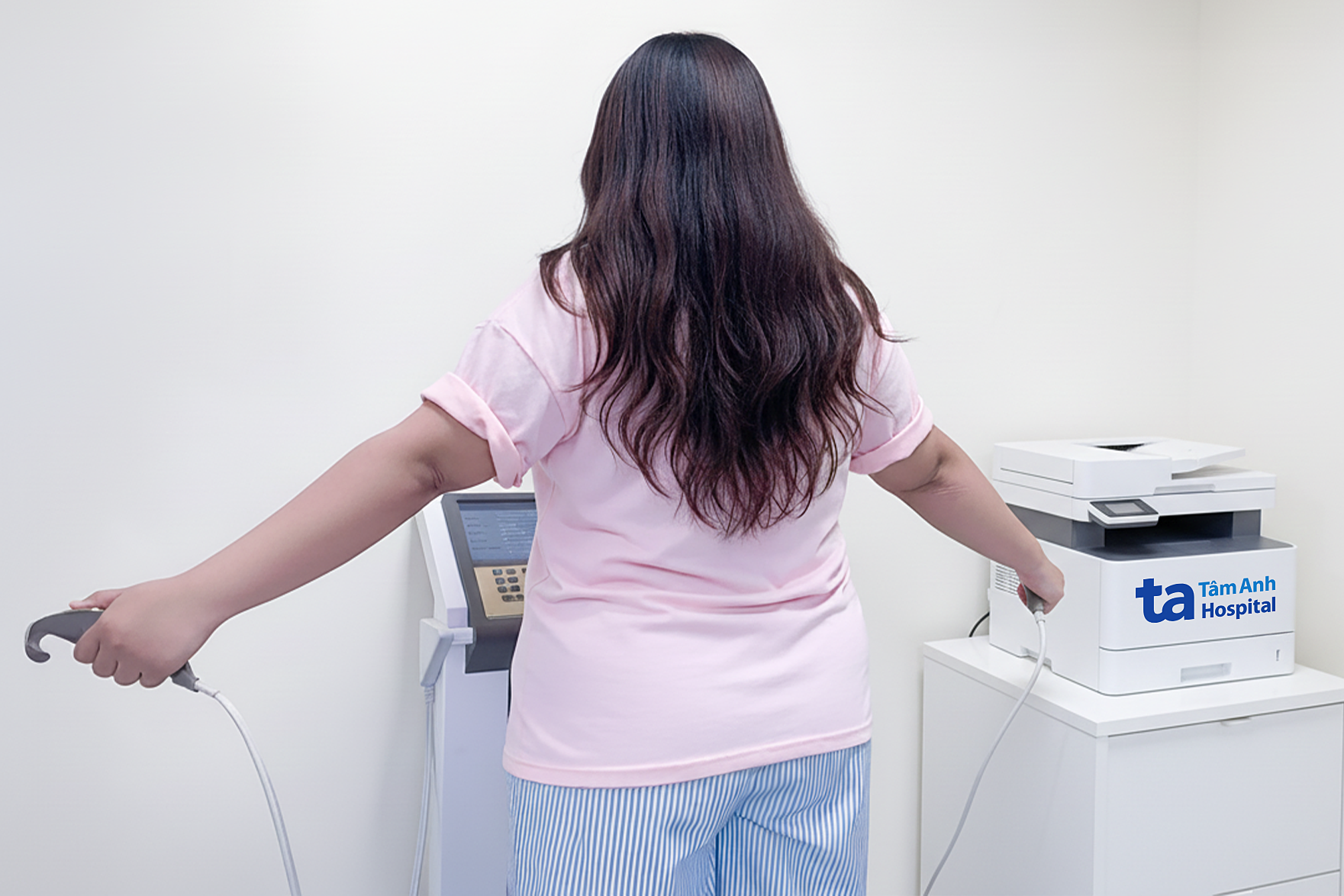 |
The patient, measured with an Inbody machine, lost over 8 kg without muscle loss. Photo: Tam Anh General Hospital |
The patient, measured with an Inbody machine, lost over 8 kg without muscle loss. Photo: Tam Anh General Hospital
Many obese individuals have excess fat and muscle loss but often overlook this issue, according to Dr. Tram. Muscle loss impacts appearance, reduces physical performance, and can lead to injuries. Common signs of obesity with muscle loss include prolonged fatigue and lethargy due to insufficient energy supply to the body, muscle and joint pain, and frequent shortness of breath and cramps during physical activity.
Duc Hanh
*Patient's name has been changed
| Readers can submit questions about endocrine diseases here for a doctor's response. |