Answer:
Hand, foot, and mouth disease (HFMD) is caused by viruses from the Enterovirus group, most commonly Coxsackievirus A16 and Enterovirus 71 (EV71). This virus primarily spreads via the digestive tract and can easily transmit from person to person through direct contact with nasal secretions, saliva, or feces of an infected individual.
Master Doctor Le Thi Hong Hue, from the Pediatric Unit at Tam Anh General Clinic District 7, explains that most cases of Coxsackievirus A16 infection are mild and can be managed at home. In contrast, EV71 causes a more severe form of the disease.
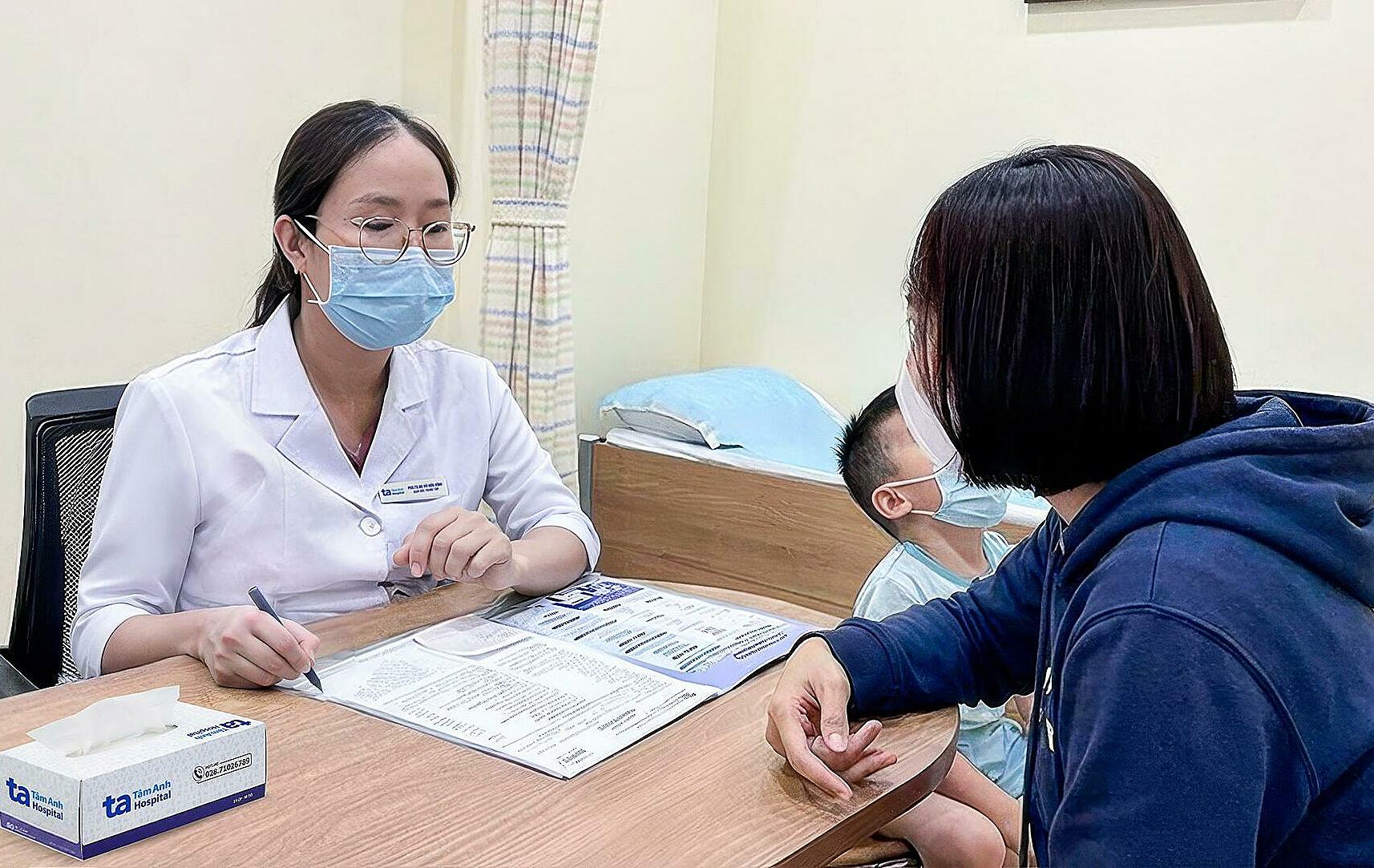 |
A doctor advises a mother about hand, foot, and mouth disease at Tam Anh General Clinic District 7. Photo: Minh Tam |
After entering the body through the digestive tract, EV71 can multiply rapidly and spread into the central nervous system. Initially, children often develop fever and mouth ulcers, but their condition can worsen within a few hours to one or two days. Some cases present with neurological signs such as frequent startling, limb tremors, lethargy, drowsiness, or altered consciousness.
When EV71 invades the central nervous system, children may experience complications like meningitis, encephalitis, or brainstem encephalitis. Early symptoms include high fever, listlessness or irritability, delirium, headache, stiff neck, bulging fontanelle, photophobia, and weakness or paralysis of the limbs.
In more severe stages, children may exhibit frequent startling, short episodes of limb jerking (often when falling asleep), drowsiness, restlessness, an unsteady gait, limb tremors, nystagmus, and convulsions. Critical cases can lead to coma, accompanied by respiratory and circulatory failure. These are the most dangerous complications of hand, foot, and mouth disease, potentially life-threatening or causing long-term sequelae if not detected and treated promptly.
Some children with hand, foot, and mouth disease may develop myocarditis, hypertension, heart failure, or circulatory collapse. Symptoms include wheezing, difficulty breathing, chest indrawing, cyanosis, and a rapid pulse. If the condition is not urgently managed, it can quickly lead to acute pulmonary edema and heart failure, threatening the child's life.
Recognizable warning signs include a rapid pulse (over 150 times per minute), mottled skin, sweating, and cold extremities. In the early stage, children may have hypertension; as the disease progresses, the pulse becomes weak, and blood pressure drops or becomes difficult to measure. These complications typically appear early, within the first two to five days of illness, and require intensive treatment at emergency care facilities.
Hand, foot, and mouth disease progresses rapidly and unpredictably. Therefore, parents should take their child to a medical facility for examination as soon as symptoms appear. During home care, it is essential to maintain personal hygiene for the child and wash hands frequently with soap. Children's clothes, diapers, towels, bowls, spoons, and toys should be disinfected with boiling water or a Cloramin B solution to limit disease transmission.
Parents must hospitalize their child if they show signs such as: continuous high fever unresponsive to antipyretics, fatigue, loss of play or appetite, excessive sleep, lethargy, frequent startling (two or more times in 30 minutes), sweating, cold extremities, or rapid breathing.
Master Doctor Le Thi Hong Hue
Pediatric Unit, Tam Anh General Clinic District 7