In recent days, Nguyen Van Tan, from Tuan Le hamlet, has hired workers to clear dead snails from his ponds to prepare for a new farming season. Looking at the piles of snail shells collected on the shore, he stated that he has never experienced such severe losses.
At the beginning of the year, Tan stocked 2,5 million young snails across 4 ponds, covering a total area of over mot hectare. Approximately 4 months later, when the snails reached a size of about 220 snails/kg, they began to die en masse, resulting in a near-total loss for the farming season.
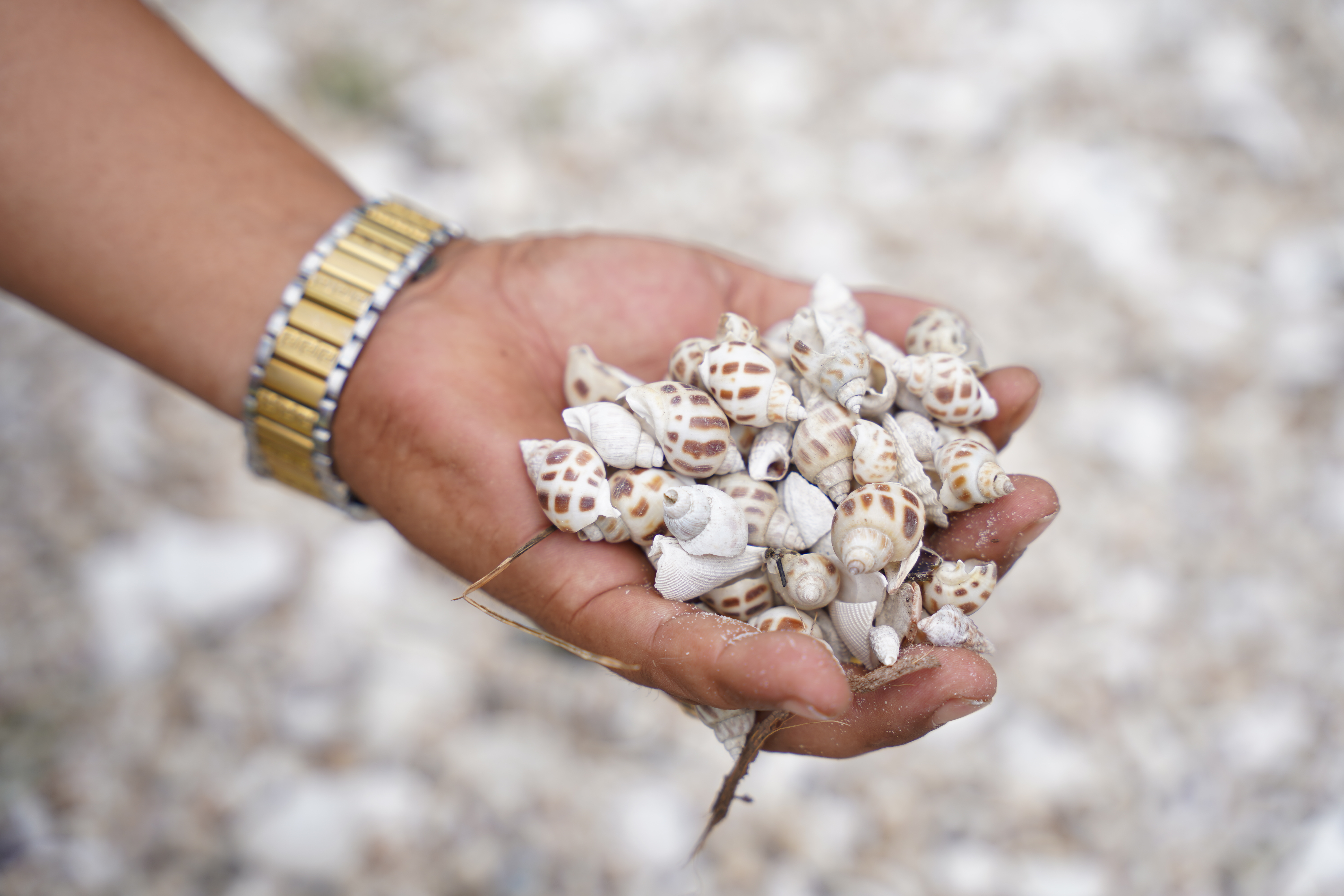 |
Nguyen Van Tan, a snail farmer in Tuan Le hamlet, Dai Lanh commune. Photo: Bui Toan
According to Tan, when the snails died, the pond water remained clear, without any foul odor or other visible abnormalities. He applied treatment chemicals, but the situation did not improve.
With over 6 years of snail farming experience, Tan noted that in previous years, there were also losses, and even significant snail deaths. However, typically about half of the yield would survive, allowing farmers to break even or make a small profit.
This year, the price for snails from traders is around 250,000-280,000 VND per kg. Tan invested approximately 700 million VND in young snails, feed, labor, and other costs. He calculated that if the farming season had been successful, revenue could have reached about 2 billion VND, with a profit of 600-700 million VND.
About 500 meters from Tan's pond, Tran Huu Tuyen suffered similar losses. In january, he stocked 2,4 million young snails. By july, his pond had experienced two waves of snail deaths, with only about 700,000 snails remaining.
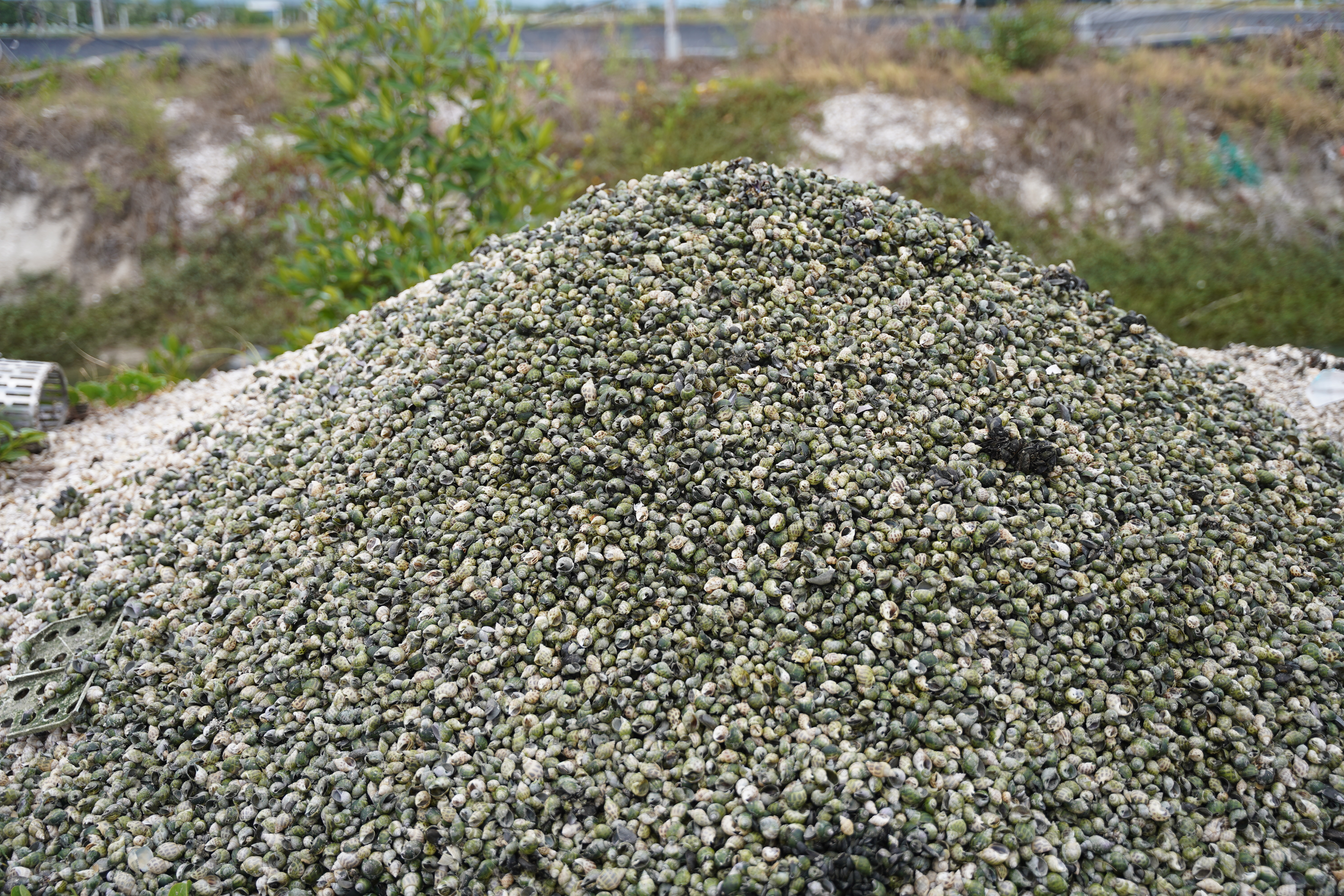 |
Dead snails piled up on the pond bank. Photo: Bui Toan
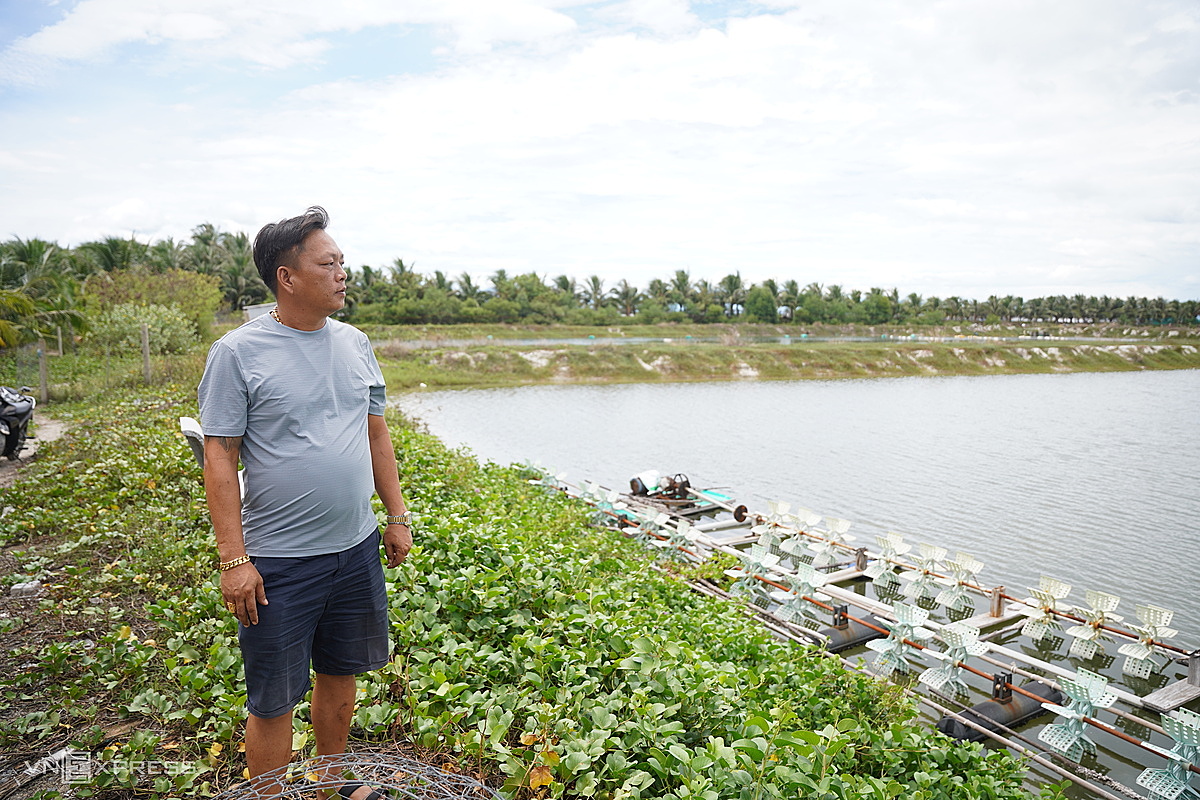 |
Dead snails piled up on the pond bank. Photo: Bui Toan
Tuyen reported investing over 500 million VND. Under favorable conditions, when the snails reached a size of about 150 snails/kg, the yield could exceed 10 tons, generating revenue of over mot billion VND. With this year's selling price, after deducting costs, he anticipated a profit of about 200 million VND.
"Snail farming is unpredictable; with the same quantity, some years bring high profits, others low, depending on market prices," he commented.
However, the consecutive waves of snail deaths disrupted his plans. Tuyen is unsure of the cause, hoping the remaining 700,000 snails will not continue to die so he can recover his capital. If he loses everything, he estimates a potential loss of about 500 million VND.
According to Tuyen, his pond was regularly disinfected, cleaned, and maintained according to procedure, yet the snails died rapidly.
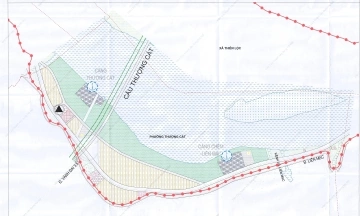
The Dai Lanh Commune People's Committee (UBND) reported that the locality has 44,5 hectares of snail farming, primarily using traditional earthen pond methods. Statistics show that about 13 farming households across nearly 8 hectares were affected, with the total estimated snail deaths exceeding 80 tons. Most snails died after 2-4,5 months of farming, at sizes ranging from 120 to 500 snails/kg.
Local authorities noted that this year's weather has been harsh and extreme, with prolonged southerly winds, leading to environmental fluctuations in farming areas and an increased mortality rate for aquatic products. However, the exact cause of the mass snail deaths is still under investigation by specialized agencies.
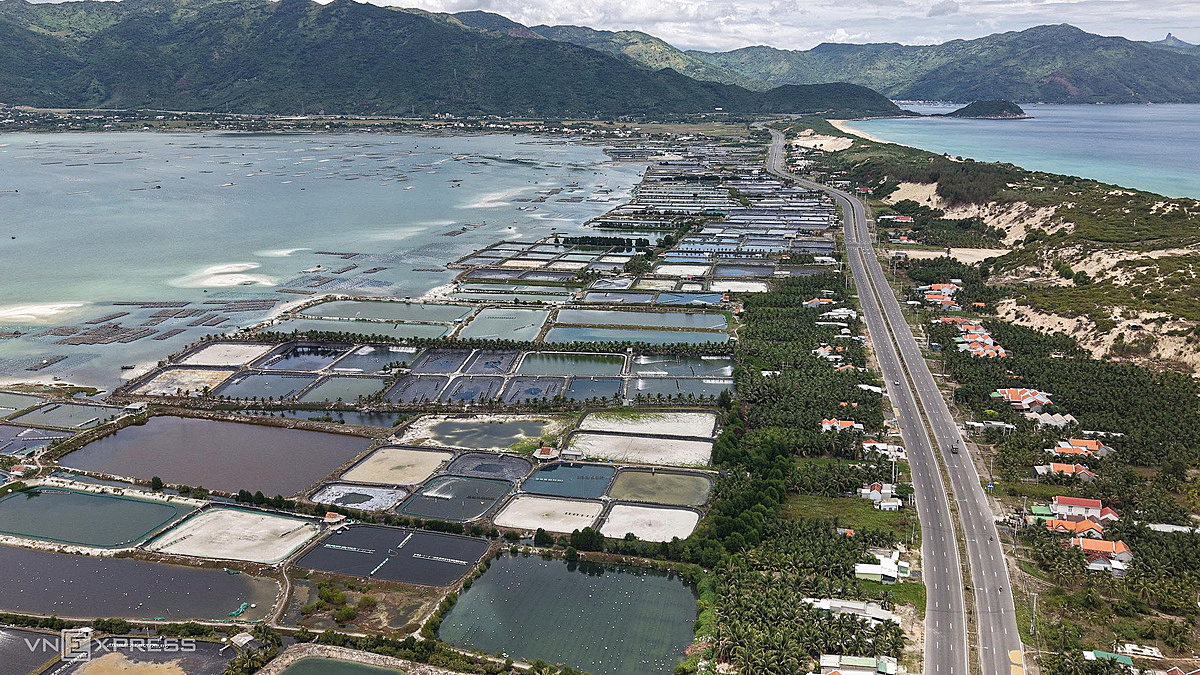 |
Aquaculture area in Dai Lanh commune. Photo: Bui Toan
According to the Khanh Hoa Department of Agriculture and Environment, specialized agencies have regularly monitored the environment, collected samples, and issued warnings to aquaculture farmers in Dai Lanh.
In late august, water samples collected from some farming areas showed ammonium levels exceeding permissible limits. This indicator suggests organic pollution in the water, which can directly affect the health and survival of snails.
Organic matter in ponds can originate from decomposing excess feed at the bottom, aquatic animal excretions, decaying algae, plankton, and dead microorganisms accumulated over time.
The Department of Agriculture and Environment has urged local authorities to advise farmers to strictly control water sources. Water introduced into ponds should pass through settling tanks, be filtered, and disinfected. Farmers should also regularly monitor parameters such as pH, salinity, and dissolved oxygen.
Farmers are also advised to maintain water aerators, provide aeration, and regularly collect dead snails, excess feed, and organic sludge from pond bottoms to limit the generation of toxic gases.
Specialized agencies are continuing to review farming areas, collect water samples from affected ponds, and analyze environmental factors to determine the precise cause of the mass snail deaths.
Bui Toan